When most homeowners think about fleas and ticks, they usually think about pets first. If the dog is scratching, the cat is uncomfortable, or someone notices a tick after spending time outside, the first reaction is often to treat the pet.
That is a smart first step, but it may not solve the whole problem.
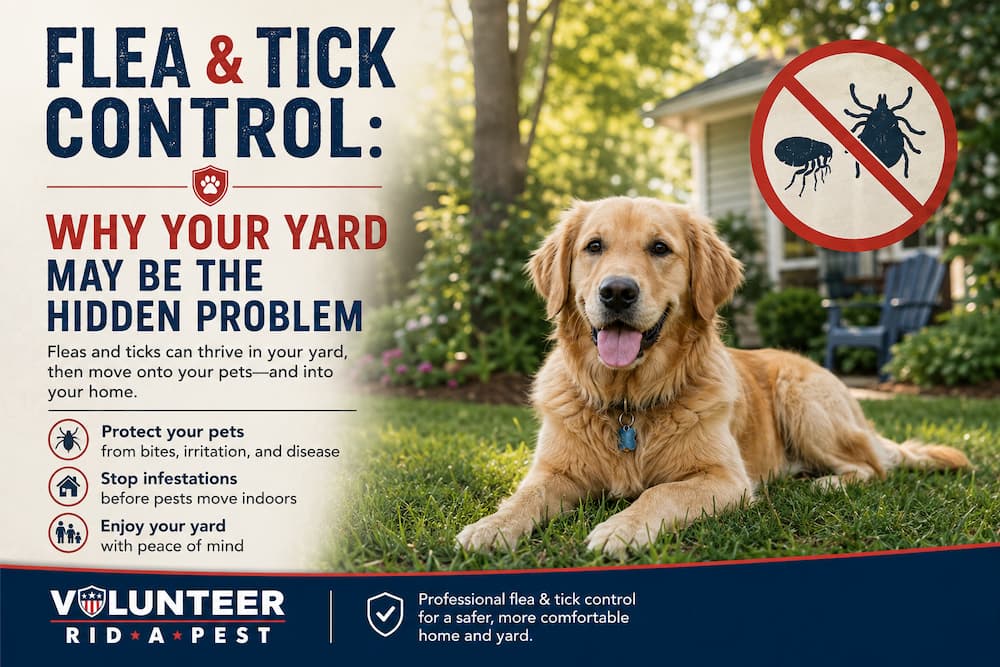
Fleas and ticks do not only live on animals. They can hide in your yard, especially in shaded, damp, grassy, and wooded areas. That means your pet may be getting exposed every time they go outside, even if they are only in the yard for a few minutes.
For Tennessee homeowners, flea and tick control is not just about comfort. It is about protecting your pets, your family, and your outdoor spaces from pests that can quickly become a bigger issue.
Why Fleas and Ticks Are a Yard Problem
Your yard can create the perfect environment for fleas and ticks to survive. These pests prefer areas that offer moisture, shade, and protection from direct sunlight.
Common hiding spots include:
- Tall grass
- Shaded areas under trees
- Bushes and shrubs
- Leaf piles
- Wooded edges
- Pet resting areas
- Under decks and porches
- Fence lines
- Areas where wildlife passes through
Even a well-maintained yard can still have problem areas. If pets, rodents, stray animals, or wildlife move through your property, they can carry fleas and ticks.
Once fleas or ticks are introduced into the yard, they can continue to thrive if conditions are right.
How Fleas Affect Pets and Homes
Fleas are small, fast, and frustrating. They can jump onto pets while outside, then enter the home via fur, bedding, furniture, or carpets.
Once indoors, fleas can become difficult to manage because they reproduce quickly. A few fleas on a pet can multiply into eggs, larvae, and adults throughout the home.
Flea problems can cause:
- Constant scratching and irritation
- Pet discomfort
- Skin redness or allergic reactions
- Flea bites on people
- Infestations in carpets and furniture
- Recurring problems even after pets are treated
This is why treating the pet alone may not be enough. If fleas are still living in the yard, your pet can continue bringing them back inside.
Why Ticks Should Not Be Ignored
Ticks are especially concerning because they attach to people and animals. They are often found in tall grass, brushy areas, wooded edges, and places where wildlife travels.
A tick can latch onto a pet, clothing, shoes, or skin after time outdoors. This makes tick control important for families who spend time in the yard, have pets, garden, play outside, or host outdoor gatherings.
Ticks are not always easy to notice right away. They can hide in fur, behind ears, around collars, near the legs, or in other hard-to-see areas.
Regular yard maintenance, pet checks, and professional pest control can all help reduce the risk of tick activity around your property.
Why Pet Protection Starts Outside
Pet flea and tick products are helpful, but they work best as part of a larger prevention plan. If your yard has active fleas or ticks, your pet may continue to be exposed every time they go outside.
Outdoor flea and tick control helps reduce the pest population at the point of exposure.
This is especially important if your pets:
- Spend time in the yard daily
- Rest in shaded areas outside
- Walk along fence lines or wooded edges
- Play near shrubs or tall grass
- Share the yard with wildlife activity
- Have had fleas or ticks before
A cleaner, better-protected yard makes pet care easier and lowers the risk of pests being carried indoors.
Signs Your Yard May Be the Source
Sometimes homeowners treat their pets and clean their homes, but the problem keeps coming back. That can be a sign that the yard is part of the issue.
Your yard may be contributing to flea or tick problems if:
- Your pet keeps scratching after being outside
- You find ticks after spending time in the yard
- Fleas return after indoor cleaning or pet treatment
- Wildlife regularly enters your property
- Your yard has shaded, damp, or overgrown areas
- Pets spend time under decks, porches, or trees
- You notice pest problems during warm, humid months
If the same problem keeps repeating, it is time to look beyond the house and consider the outdoor environment.
Yard Maintenance Tips That Help Reduce Fleas and Ticks
Good yard care can make your property less inviting to fleas and ticks. While maintenance alone may not eliminate the problem, it can help reduce pest-friendly conditions.
Here are a few helpful steps:
Keep the Grass Mowed
Fleas and ticks like protected areas. Keeping your lawn trimmed reduces hiding places and increases sunlight exposure.
Remove Leaf Litter and Yard Debris
Leaves, brush, and organic debris can retain moisture and provide pests with places to hide. Clean these areas regularly, especially near fences, patios, and pet areas.
Trim Shrubs and Bushes
Overgrown landscaping creates shade and shelter. Trimming shrubs helps improve airflow and reduce damp hiding spots.
Limit Wildlife Activity
Rodents, raccoons, stray cats, deer, and other animals can carry fleas and ticks. Secure trash cans, avoid leaving pet food outside, and reduce places where wildlife can nest or hide.
Pay Attention to Pet Resting Areas
If your pet has a favorite outdoor spot, that area should be monitored closely. Fleas and ticks may gather where pets spend the most time.
Create Separation from Wooded Areas
If your property borders a wooded or brushy area, keeping a clean, maintained boundary can help reduce tick movement into the main yard.
Why Professional Flea and Tick Control Matters
Flea and tick control can be challenging because these pests often hide in areas homeowners overlook. Professional treatment helps target the places where fleas and ticks are more likely to live and reproduce.
A professional pest control service can inspect your property, identify problem areas, and apply treatments designed to help reduce flea and tick activity outdoors.
This approach is especially helpful for homes with pets, children, shaded yards, wooded surroundings, or recurring pest problems.
At Volunteer Rid-A-Pest, our team understands the pest challenges homeowners face in Tennessee. We focus on practical, thorough service designed to help protect your home, yard, family, and pets.
Flea and Tick Control Is About More Than Pets
Pet protection is a major reason homeowners schedule flea and tick control, but it is not the only reason.
A yard with fewer fleas and ticks can help improve comfort for the entire household. It can make outdoor time more enjoyable, reduce exposure to pests, and help prevent pests from moving inside.
Professional flea and tick control can benefit:
- Pet owners
- Families with children
- Homeowners who garden
- People who enjoy outdoor seating areas
- Homes near wooded or shaded spaces
- Properties with wildlife activity
- Anyone who wants a more comfortable yard
Your yard should be a place where your family can relax, not a place where pests are waiting.
Do Not Wait Until Fleas and Ticks Take Over
Flea and tick problems are easier to manage when they are addressed early. Waiting until pets are uncomfortable or ticks are being found regularly can make the issue harder to control.
Seasonal treatment can help reduce activity before the problem becomes more noticeable.
If your pets spend time outside or your yard has shaded, grassy, or wooded areas, now is a good time to think about flea and tick protection.
Protect Your Yard, Your Pets, and Your Family
Fleas and ticks may be small, but they can cause big problems when they are allowed to spread. Treating your pet is important, but your yard may be where the problem starts.
Volunteer Rid-A-Pest can help you take a more complete approach to flea and tick control with a service designed for Tennessee homes and yards.
Do not let hidden pests take over your outdoor space. Contact Volunteer Rid-A-Pest today to schedule flea and tick control and enjoy a more comfortable, protected yard this season.