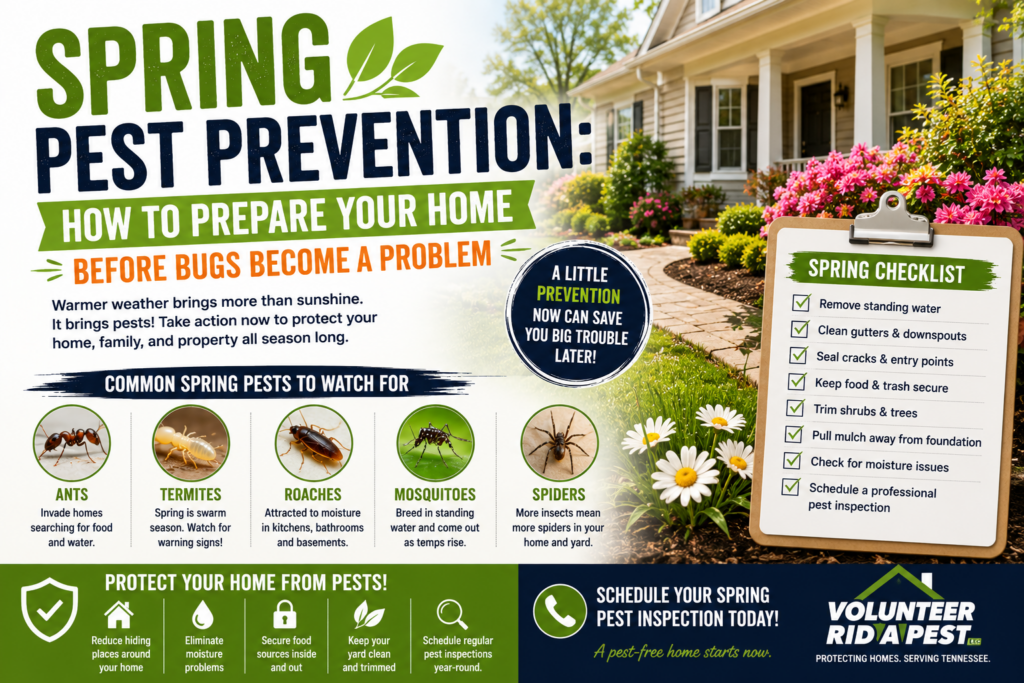
Spring is a welcome season in Tennessee. The weather starts warming up, flowers begin to bloom, and families spend more time outdoors. However, spring also brings something many homeowners would rather avoid: increased pest activity.
As temperatures rise, pests begin moving, feeding, nesting, and searching for moisture. Ants may start showing up in the kitchen. Spiders may become more noticeable in garages and corners. Roaches may move toward damp areas. Mosquitoes may begin breeding in standing water. Termites may become active around the home without being easily seen.
The good news is that spring pest problems can often be reduced with early preparation. Taking action before pests become a bigger issue can help protect your home, yard, family, and pets throughout the warmer months.
Why Pest Activity Increases in Spring
Spring creates the right conditions for pests to become more active. Warmer temperatures, increased moisture, and more available food sources all encourage pests to move closer to homes.
Common spring pest attractants include:
- Standing water after rain
- Damp crawl spaces
- Clogged gutters
- Food crumbs and spills
- Pet food and water bowls
- Overgrown grass and shrubs
- Mulch near the foundation
- Cracks around doors and windows
- Outdoor trash cans
- Moisture around the foundation
Even a clean home can experience pest problems when outdoor conditions support pest activity. Prevention is about making your property less inviting to pests before they settle in.
Start with the Outside of Your Home
Many spring pest problems begin outdoors. Pests often gather around the foundation, landscaping, mulch beds, porches, decks, crawl space entrances, and damp areas before moving inside.
Walk around your home and look for areas that may attract pests. Pay close attention to places where water collects, plants touch the house, or small gaps allow pests to enter.
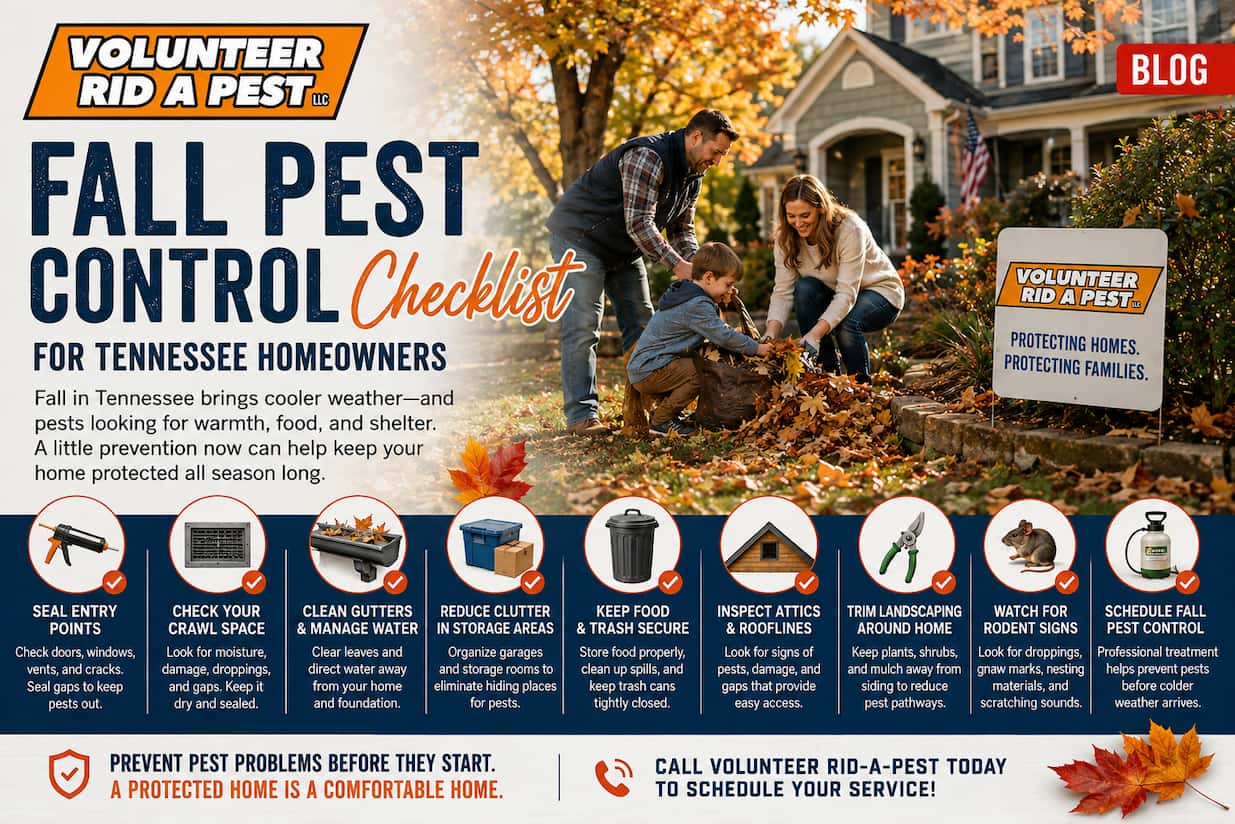
Simple exterior maintenance can make a big difference. Keep grass trimmed, remove leaf piles, clean up yard debris, and make sure shrubs are not pressed against the home. These steps reduce hiding spots and make it harder for pests to stay close to your foundation.
Remove Standing Water
Standing water is one of the biggest spring pest concerns because it can attract mosquitoes and other moisture-loving pests. Mosquitoes do not need a large amount of water to breed. Even small containers, clogged gutters, flowerpot saucers, or low spots in the yard can become a problem.
After it rains, check for water in:
- Buckets
- Birdbaths
- Flowerpots
- Pet bowls
- Tarps
- Toys
- Wheelbarrows
- Clogged gutters
- Outdoor furniture covers
- Drainage areas
Regularly emptying standing water can help reduce mosquito activity before it becomes a larger issue.
Seal Entry Points
Pests do not need much space to get inside. Small cracks, gaps, and openings around the home can give ants, roaches, spiders, and other pests easy access.
Check areas such as:
- Door frames
- Window frames
- Garage doors
- Foundation cracks
- Utility openings
- Vents
- Crawl space doors
- Gaps around pipes
- Damaged screens
- Weatherstripping
Sealing these openings can help prevent pests from moving indoors as spring activity increases.
Keep Food and Trash Secure
As pests become more active, they begin searching for food. Kitchens, pantries, trash areas, and outdoor garbage cans can all attract pests if food sources are easily accessible.
To help prevent pest activity:
- Store food in sealed containers.
- Wipe counters and tables regularly.
- Sweep crumbs from floors.
- Take trash out often.
- Keep garbage cans tightly closed.
- Avoid leaving pet food out overnight.
- Clean up spills quickly.
- Rinse recyclables before storing them.
Small food sources can attract ants, roaches, flies, rodents, and other pests. Keeping food areas clean helps reduce what pests are looking for.
Watch for Moisture Problems
Moisture is one of the most common reasons pests become active around a home. Termites, ants, roaches, mosquitoes, and many other pests are drawn to damp conditions.
Spring is a good time to check for:
- Leaky faucets
- Plumbing leaks
- Damp cabinets
- Poor drainage
- Wet crawl spaces
- Water near the foundation
- Clogged gutters
- Downspouts draining too close to the home
- Mulch holding moisture against the siding
Fixing moisture issues early can help reduce pest-friendly conditions before warmer weather worsens activity.
Pay Attention to Termite Warning Signs
Spring is an important season for termite awareness. Termites often remain hidden, but homeowners may notice signs such as mud tubes, soft wood, damaged trim, discarded wings, or swarming insects.
Areas to check include:
- Foundation walls
- Crawl space areas
- Basement walls
- Deck posts
- Porch supports
- Wood piles
- Mulch beds
- Door and window frames
Termites can cause damage quietly, so it is important to schedule a professional inspection if you notice warning signs or moisture concerns around the home.
Clean and Organize Storage Areas
Garages, basements, attics, and sheds can become hiding places for pests, especially when they are cluttered or rarely disturbed.
Spring is a good time to clean these areas and look for signs of activity, including droppings, webs, gnaw marks, nesting materials, or insects.
Helpful steps include:
- Store items in sealed plastic containers.
- Keep boxes off the floor when possible.
- Remove unnecessary clutter.
- Check corners and shelves for webs.
- Keep pet food and birdseed sealed.
- Look for gaps around doors and walls.
A cleaner, more organized space gives pests fewer places to hide.
Why Professional Spring Pest Control Helps
DIY prevention can help, but professional pest control gives homeowners a stronger defense before seasonal pest activity increases.
A professional pest inspection can help identify:
- Pest entry points
- Moisture concerns
- Early signs of termite activity
- Ant trails or outdoor colonies
- Roach hiding areas
- Spider activity
- Mosquito breeding conditions
- Crawl space or foundation concerns
- Areas that need treatment
Professional pest control is not only about treating the pests you can see. It is about finding the source, reducing activity, and helping prevent future infestations.
Stay Ahead of Spring Pest Problems
Spring pest problems can build quickly. What starts as a few ants, a little moisture, or standing water in the yard can turn into a larger issue if it is not addressed early.
By preparing your home before pests become more active, you can help protect your family, pets, and property throughout the warmer months.
Volunteer Rid-A-Pest helps Tennessee homeowners stay ahead of seasonal pest problems with professional inspections, treatments, and prevention-focused service.
Do not wait until pests become a bigger problem. Contact Volunteer Rid-A-Pest today to schedule spring pest control service and protect your home before bugs take over.