As February moves along, many Tennessee homeowners begin looking forward to warmer weather, longer days, and the start of spring. But even as winter begins to fade, rodent problems can still be active inside homes.
Mice and rats do not disappear just because the weather slowly starts changing. If rodents find shelter in your attic, crawl space, garage, basement, or walls during the colder months, they may continue to nest, feed, and move through hidden areas of the home.
For homeowners, this is an important time to pay attention. Rodent activity that started in winter can continue into spring if the problem is not addressed early.
Why Rodents Enter Homes During Cold Weather
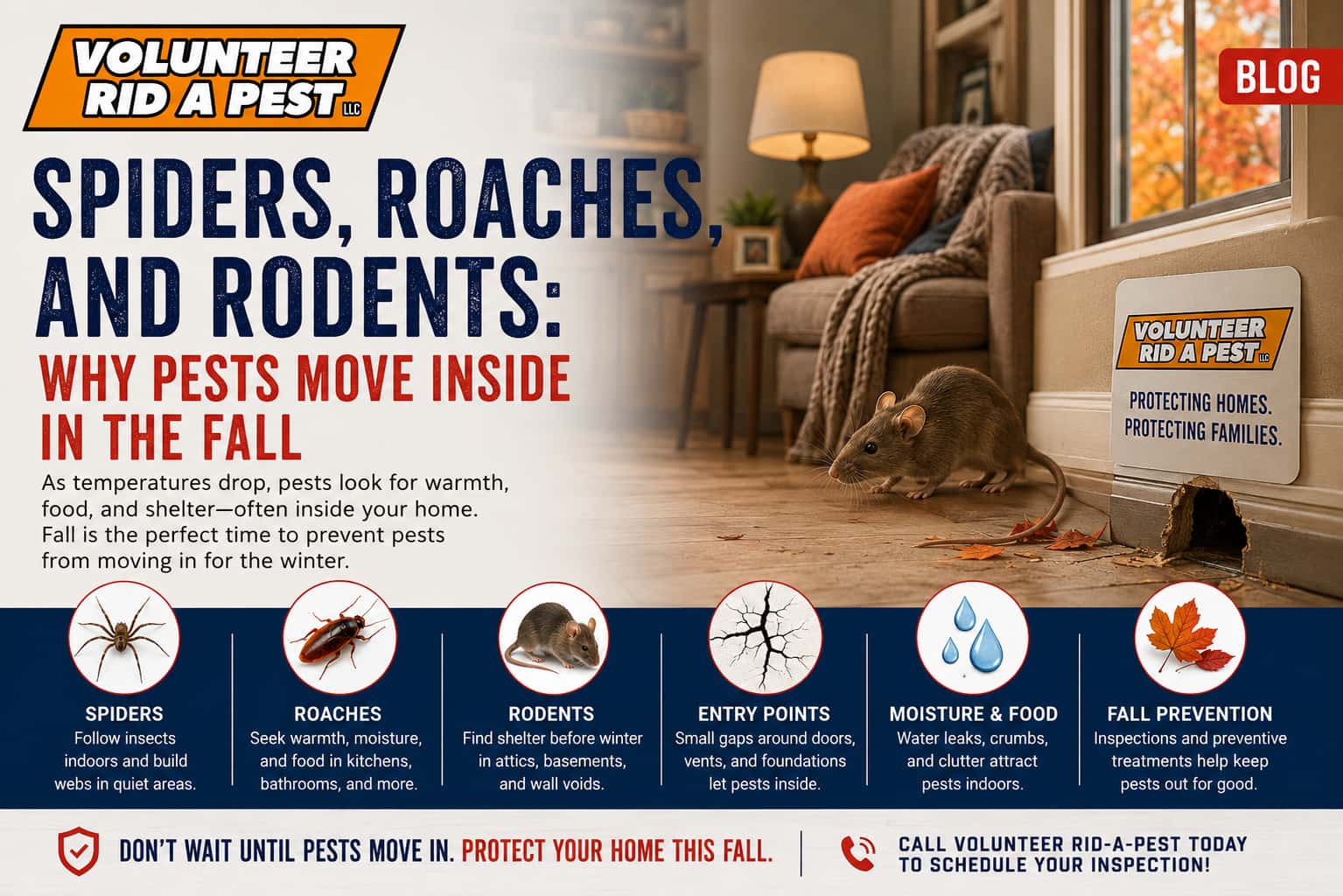
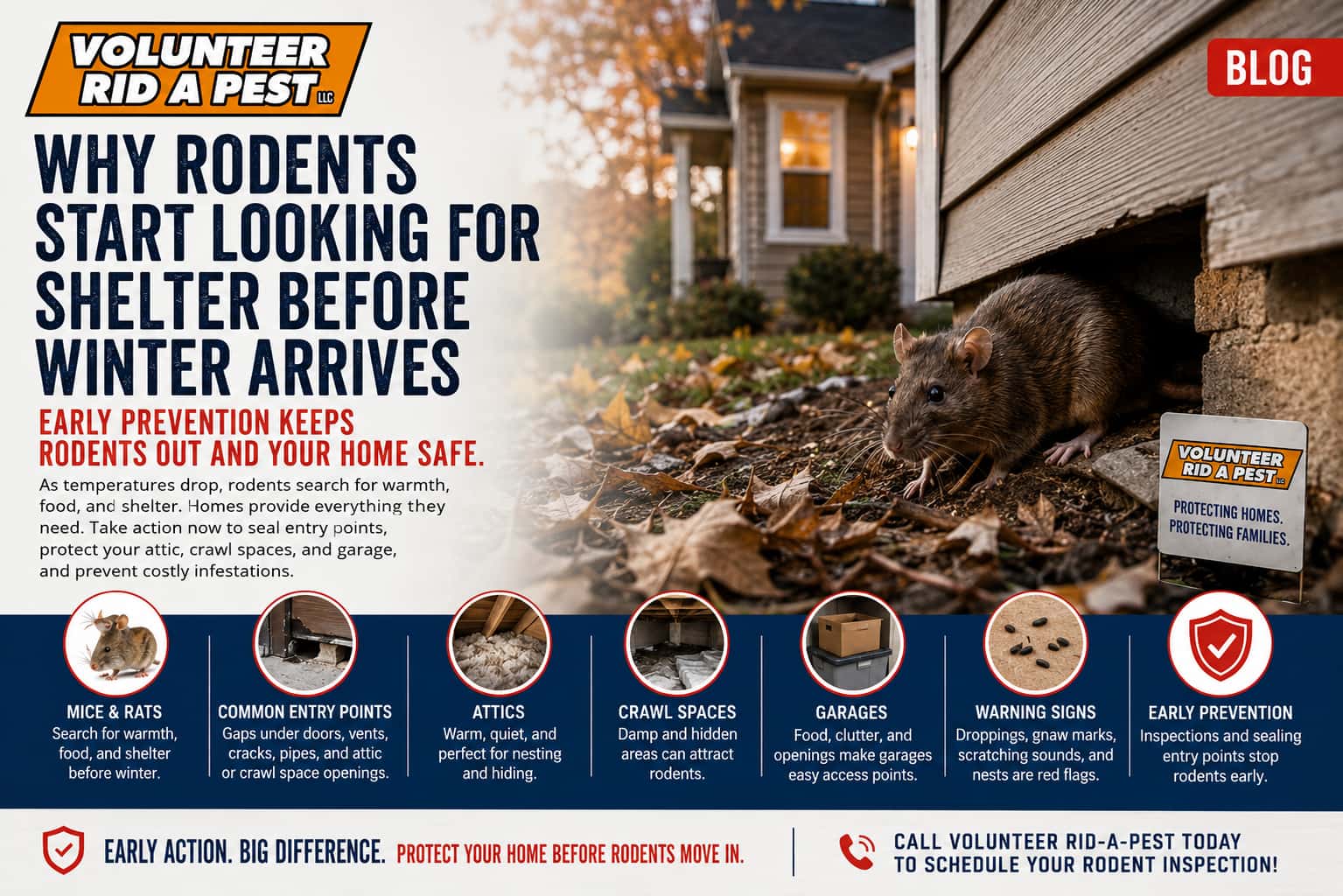
Rodents often move indoors during fall and winter in search of warmth, food, water, and shelter. A home can provide everything they need to survive the colder months.
Common rodent attractants include:
- Pet food left out overnight
- Birdseed stored in garages
- Open trash cans
- Food crumbs
- Cluttered storage areas
- Warm attic spaces
- Crawl spaces
- Gaps around doors, vents, and foundations
- Garage doors that do not seal properly
Once rodents get inside, they may stay hidden for weeks or months. By February, homeowners may begin noticing the warning signs more clearly.
Signs Rodents May Still Be Active
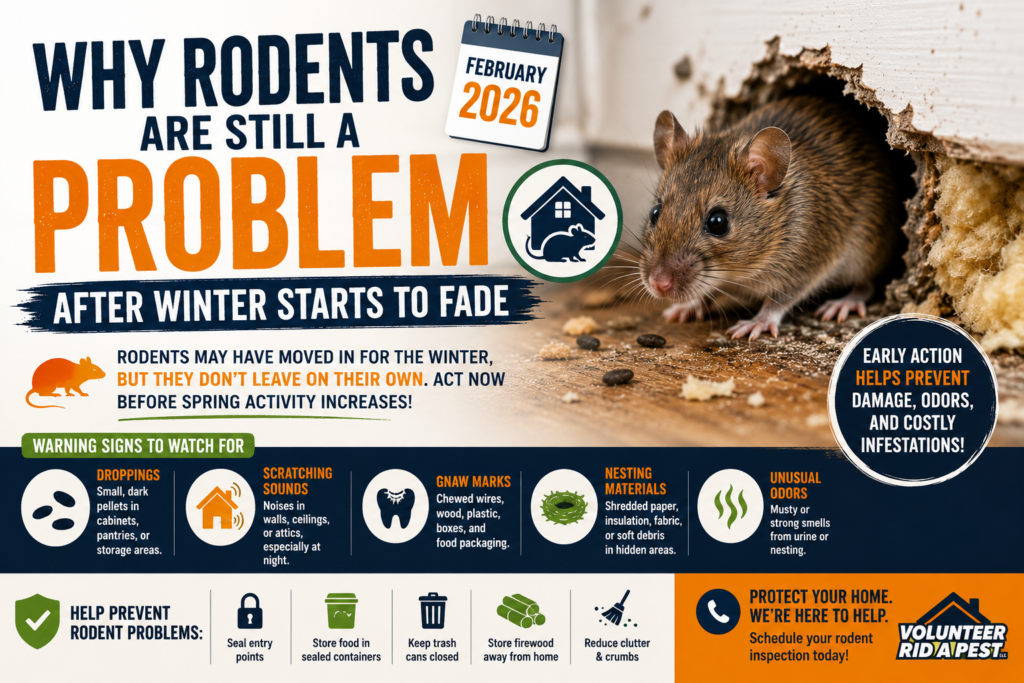
Rodents are good at hiding, but they often leave clues behind. Even if you have not seen a mouse or rat directly, there may still be signs of activity.
Watch for:
- Droppings in cabinets, pantries, garages, or storage areas
- Scratching sounds in walls, ceilings, or attics
- Chewed food packaging
- Gnaw marks on wood, plastic, or wiring
- Nesting materials such as shredded paper or insulation
- Musty or unusual odors
- Grease marks along baseboards or walls
- Pets acting alert near cabinets, walls, or appliances
These signs should not be ignored. Rodents can reproduce quickly, and a small issue can become a larger infestation if left untreated.
Why February Is a Smart Time for Rodent Control
February is a great time to address rodent concerns before spring pest activity increases. If rodents have been nesting inside your home over the winter, early treatment can help prevent the problem from continuing into the warmer months.
A professional inspection can help identify where rodents are active, how they are getting inside, and what areas need attention.
This is especially important in areas such as:
- Attics
- Crawl spaces
- Garages
- Basements
- Kitchens
- Pantries
- Wall voids
- Utility areas
- Storage rooms
The sooner rodent activity is addressed, the easier it is to reduce damage and prevent recurring problems.
How Rodents Can Damage Your Home
Rodents are more than just a nuisance. They can cause real problems inside a home.
Rodents may chew through:
- Insulation
- Cardboard boxes
- Food packaging
- Wires
- Wood
- Plastic containers
- Stored personal items
Chewed wiring can be especially concerning. Rodents chew constantly, and if they damage electrical wiring, it can create serious safety concerns.
They can also contaminate areas with droppings, urine, nesting materials, and odors. This makes professional rodent control important, especially when activity is found in kitchens, pantries, attics, or crawl spaces.
Common Entry Points Homeowners Should Check
Rodents do not need a large opening to get inside. Small gaps around the home can give them access to hidden areas.
Common rodent entry points include:
- Gaps under doors
- Openings around pipes
- Cracks near the foundation
- Damaged vents
- Gaps around garage doors
- Crawl space openings
- Holes near utility lines
- Damaged siding
- Roofline gaps
- Loose weatherstripping
A professional inspection can help locate entry points that homeowners may miss.
How to Help Prevent Rodent Problems
Homeowners can take several steps to make their property less inviting to rodents.
Helpful prevention tips include:
- Store food in sealed containers.
- Keep pet food sealed and off the floor.
- Take trash out regularly.
- Keep outdoor trash cans tightly closed.
- Reduce clutter in garages, basements, and storage areas.
- Seal small gaps around doors, windows, pipes, and foundations.
- Store firewood away from the home.
- Check attic and crawl space access points.
- Repair damaged vents and screens.
- Clean up birdseed, crumbs, and outdoor food sources.
These steps can help reduce food and shelter and limit access points, but professional service is important if rodents are already active.
Why Professional Rodent Control Matters
Rodent control is not just about setting traps. A complete approach should identify the source of the problem, find entry points, inspect nesting areas, and help prevent future access.
Professional rodent control can help with:
- Identifying rodent activity
- Finding hidden entry points
- Locating nesting areas
- Treating active problems
- Recommending exclusion steps
- Helping reduce future infestations
- Monitoring problem areas over time
Volunteer Rid-A-Pest helps Tennessee homeowners address rodent concerns with service designed for local homes and local pest pressures.
Do Not Let Winter Rodent Problems Continue Into Spring
Rodents may have moved in during the colder months, but they do not have to stay. February is the right time to inspect, treat, and protect your home before spring pest activity increases.
If you have noticed droppings, scratching sounds, gnaw marks, nesting materials, or unusual odors, do not wait for the problem to grow.
Volunteer Rid-A-Pest is here to help homeowners protect their homes from hidden rodent activity.
Contact Volunteer Rid-A-Pest today to schedule rodent control service and keep your home protected as winter turns into spring.