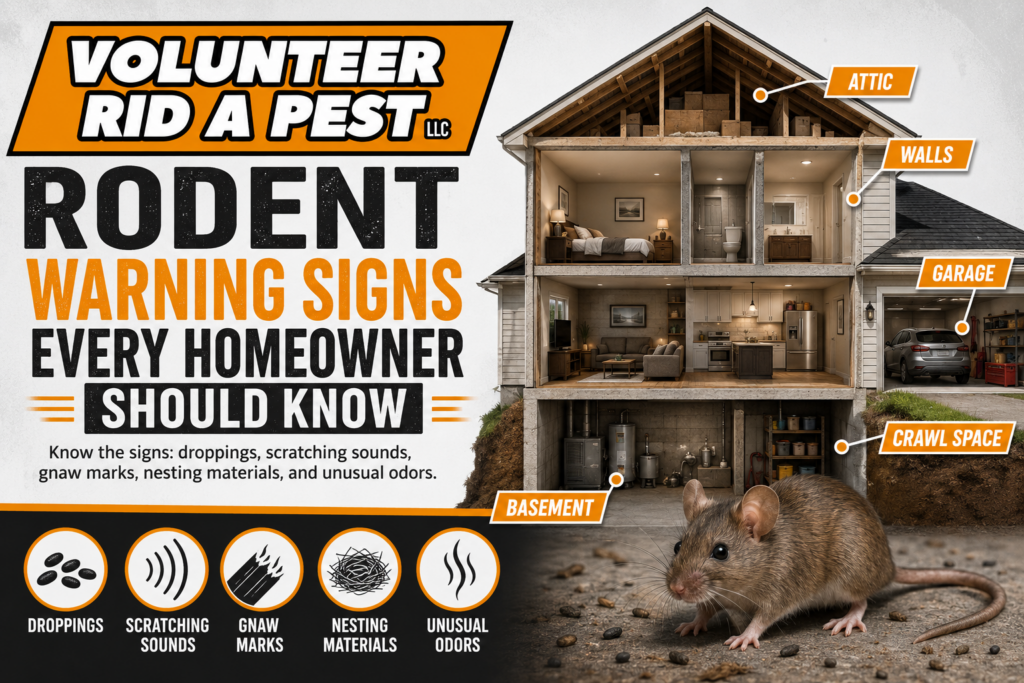
Rodents are one of the most stressful pest problems a homeowner can face. Mice and rats can move quietly through walls, attics, crawl spaces, garages, basements, and storage areas before they are ever seen in the open.
The problem is that rodents do not usually stay in one place. Once they find food, warmth, water, and shelter, they can settle in quickly and begin causing damage. They may chew through boxes, insulation, wiring, stored items, and even parts of the home. They can also leave behind droppings, nesting materials, and odors that make the problem harder to ignore.
For Tennessee homeowners, knowing the early warning signs of rodent activity can help prevent a small issue from becoming a larger infestation.
Why Rodents Enter Homes
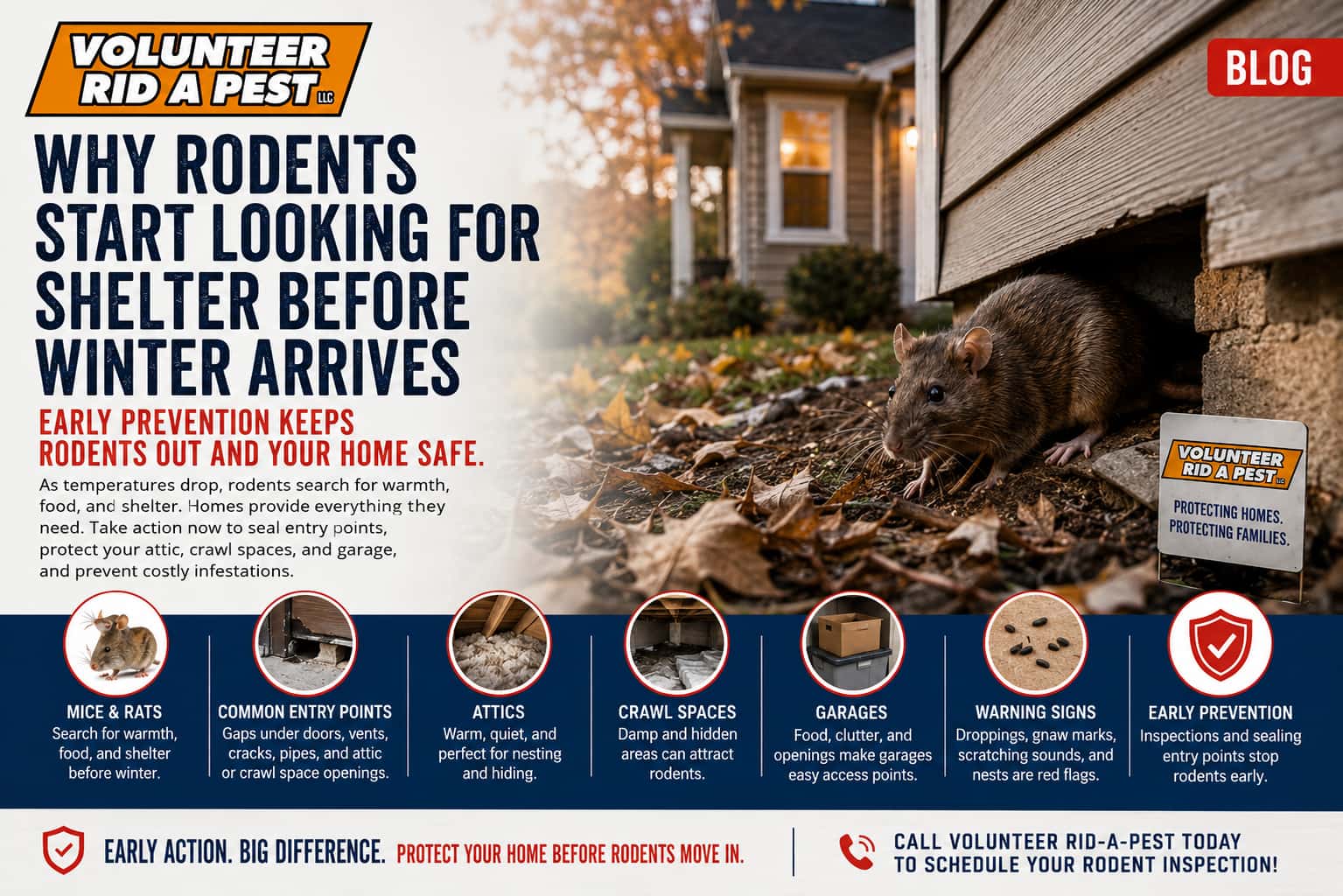
Rodents often move indoors in search of shelter, especially during colder months, heavy rain, or seasonal changes. However, they can become a problem at any time of year if they find easy access and reliable food sources.
Common reasons rodents enter homes include:
- Open gaps around doors or windows
- Cracks near the foundation
- Unsealed vents or utility openings
- Garage doors that do not close tightly
- Pet food left out
- Birdseed or stored food in garages
- Trash that is not sealed
- Cluttered storage areas
- Warm attics, crawl spaces, or basements
Even a small opening can be enough for rodents to get inside. Mice can squeeze through very small gaps, and rats can take advantage of larger openings around the home.
Warning Sign 1: Rodent Droppings
Droppings are one of the most common signs of rodent activity. Homeowners may find them in areas where rodents travel, feed, or hide.
Common places to find droppings include:
- Kitchen cabinets
- Pantry shelves
- Under sinks
- Garages
- Basements
- Attics
- Crawl spaces
- Behind appliances
- Along walls
- Near stored food or pet food
Rodent droppings are usually small, dark, and pellet-shaped. Fresh droppings may look darker and softer, while older droppings may appear dry or crumbly.
If you find droppings, avoid sweeping or vacuuming them without proper precautions. A professional pest control service can help inspect the area, identify the source, and recommend the right next steps.
Warning Sign 2: Scratching or Scurrying Sounds
Rodents are often heard before they are seen. Many homeowners notice scratching, scurrying, or chewing sounds coming from walls, ceilings, attics, or crawl spaces.
These sounds are often more noticeable at night, when the home is quiet, because rodents are typically active after dark.
You may hear noises coming from:
- Walls
- Ceilings
- Attics
- Crawl spaces
- Cabinets
- Garages
- Basements
- Behind appliances
If you hear repeated movement in hidden areas, do not ignore it. Sounds inside walls or ceilings can mean rodents are traveling through voids or nesting nearby.
Warning Sign 3: Gnaw Marks
Rodents chew constantly because their teeth keep growing. This means they may gnaw on many different materials inside and around the home.
You may notice gnaw marks on:
- Food packaging
- Cardboard boxes
- Wooden trim
- Baseboards
- Plastic containers
- Wires
- Insulation
- Furniture
- Stored items
- Garage materials
Chewed wires are especially concerning because they can create safety risks. If you notice gnaw marks, it is important to schedule an inspection before the damage becomes worse.
Warning Sign 4: Nesting Materials
Rodents build nests using soft, shredded materials. These nests are often hidden in quiet, dark, protected areas.
Common nesting materials include:
- Shredded paper
- Fabric
- Insulation
- Cardboard
- Dryer lint
- Leaves
- Grass
- Soft packing materials
Rodent nests may be found in attics, crawl spaces, garages, wall voids, closets, cabinets, storage boxes, or behind appliances.
Finding nesting materials is a strong sign that rodents are not just passing through. They may be settling in.
Warning Sign 5: Unusual Odors
A strong, musty, or unpleasant odor may be a sign of rodent activity. Rodents can leave behind urine, droppings, nesting materials, and other contamination that create noticeable smells over time.
Odors may be strongest in:
- Cabinets
- Closets
- Attics
- Basements
- Garages
- Crawl spaces
- Wall voids
- Areas with stored items
If the smell gets stronger in one specific area, there may be active nesting or hidden rodent activity nearby.
Warning Sign 6: Tracks, Smudge Marks, or Grease Marks
Rodents often travel along the same paths repeatedly. As they move, they may leave behind grease marks, smudges, or tracks along walls, baseboards, pipes, or beams.
Look for signs along:
- Wall edges
- Baseboards
- Garage walls
- Attic beams
- Crawl space areas
- Pipes
- Entry points
- Foundation edges
In dusty areas, you may also notice tiny footprints or tail marks. These signs can help identify where rodents are traveling.
Warning Sign 7: Damaged Food Packaging
Rodents are always searching for food. If they reach your pantry, garage shelves, or storage areas, they may chew through bags, boxes, and containers.
Check for damage on:
- Cereal boxes
- Rice bags
- Flour bags
- Pet food bags
- Birdseed
- Snack packaging
- Stored dry goods
- Trash bags
Food packaging with small holes, shredded edges, or chew marks may indicate rodent activity. Any contaminated food should be discarded.
Warning Sign 8: Pets Acting Strange
Sometimes pets notice rodents before homeowners do. Dogs and cats may stare at walls, scratch near cabinets, sniff certain corners, or become unusually alert at night.
Pay attention if pets are repeatedly focused on:
- Kitchen cabinets
- Baseboards
- Closets
- Garage corners
- Attic access points
- Areas behind appliances
- Crawl space entrances
While pet behavior alone does not confirm the presence of rodents, it can be another clue when combined with droppings, sounds, or damage.
Common Rodent Entry Points Around the Home
Rodents do not need a wide-open door to get inside. They often use small gaps and hidden openings that homeowners overlook.
Common entry points include:
- Gaps under doors
- Cracks in the foundation
- Openings around pipes
- Vents without proper covers
- Gaps around garage doors
- Damaged weatherstripping
- Holes near utility lines
- Crawl space openings
- Roofline gaps
- Damaged siding
- Openings near decks or porches
A professional inspection can help locate these access points and recommend ways to reduce future entry.
Why Rodent Problems Should Be Addressed Quickly
Rodents can reproduce quickly, and a small issue may become more serious if left untreated. The longer they remain inside, the more damage and contamination they can cause.
Rodent problems may lead to:
- Chewed wires
- Damaged insulation
- Contaminated food
- Droppings in storage areas
- Unpleasant odors
- Nesting in hidden spaces
- Damage to boxes and personal items
- Ongoing activity inside walls or ceilings
Early action is one of the best ways to reduce stress, damage, and repeat problems.
How Homeowners Can Help Prevent Rodents
There are several steps homeowners can take to make the property less inviting to rodents.
Helpful prevention tips include:
- Seal gaps around doors, windows, pipes, and foundations.
- Store food in sealed containers.
- Keep pet food sealed and off the floor.
- Take trash out regularly.
- Keep garbage cans tightly closed.
- Reduce clutter in garages, basements, and storage areas.
- Store firewood away from the home.
- Keep grass and shrubs trimmed.
- Check attic and crawl space access points.
- Repair damaged vents, screens, and weatherstripping.
- Clean up birdseed, crumbs, and outdoor food sources.
These steps can help reduce food, shelter, and access points, but professional service is important when rodents are already active.
Why Professional Rodent Control Matters
Rodent control is more than setting a few traps. A complete approach should identify the rodent species, locate signs of activity, find entry points, and help prevent future access.
Professional rodent control can help with:
- Inspecting the home for signs of activity
- Identifying entry points
- Locating nesting areas
- Addressing active rodent problems
- Recommending exclusion steps
- Helping prevent repeat activity
- Monitoring problem areas over time
At Volunteer Rid-A-Pest, we understand how stressful rodent problems can be for homeowners. Our team helps identify where rodents are active, how they may be getting inside, and what steps can help protect the home.
Do Not Ignore Rodent Warning Signs
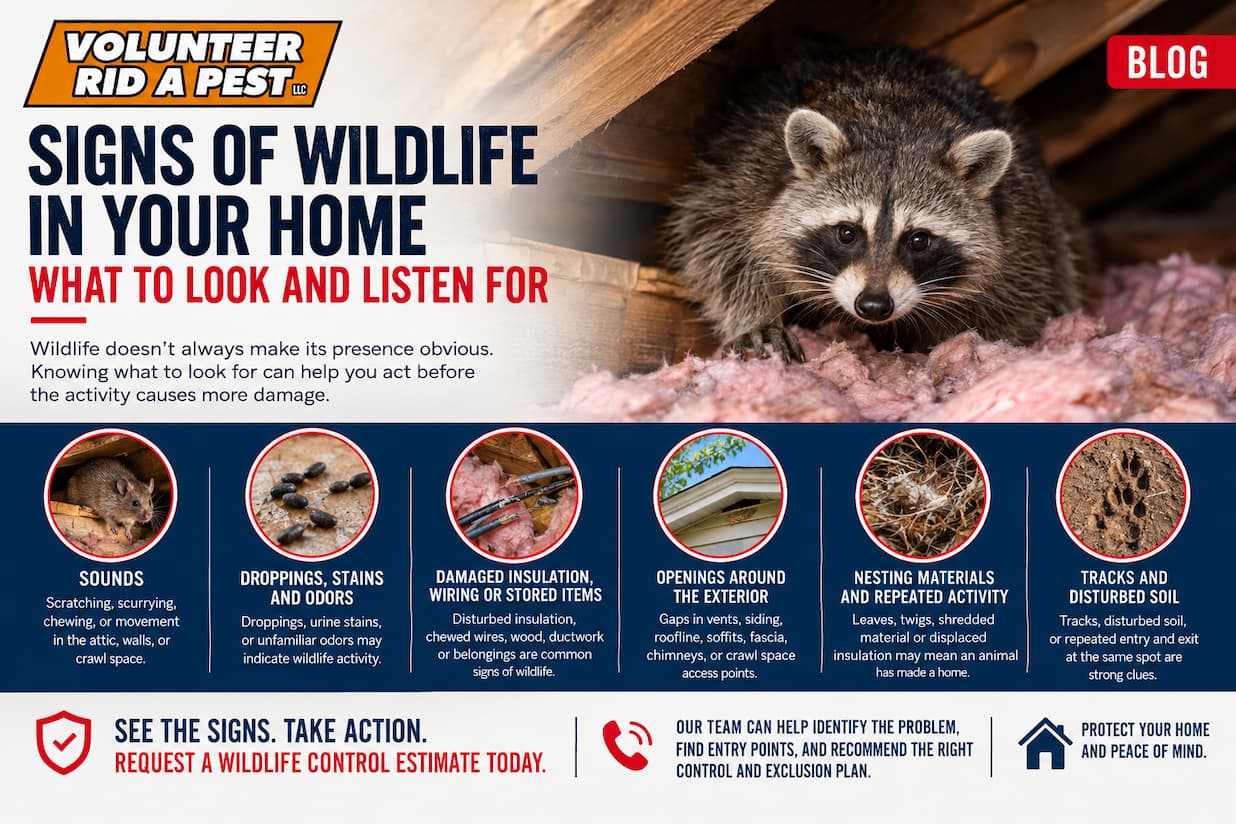
Rodents are good at hiding, but they often leave clues behind. Droppings, scratching sounds, gnaw marks, nesting materials, unusual odors, damaged food packaging, and grease marks can all point to a rodent problem.
If you notice any of these signs, it is best to act quickly. Waiting can allow the problem to grow and make the home more difficult to protect.
Volunteer Rid-A-Pest is here to help Tennessee homeowners identify and address rodent issues through professional pest control services tailored to local homes.
Contact Volunteer Rid-A-Pest today to schedule rodent control service and protect your home from hidden pest activity.