February may still feel like winter, but it is also an important time for homeowners to start thinking ahead. As temperatures slowly change and spring approaches, moisture around the home can create the perfect conditions for pest problems.
Winter rain, poor drainage, clogged gutters, damp crawl spaces, and moisture around the foundation may not seem urgent at first. However, these conditions can attract pests and provide them with places to hide, breed, or prepare for increased activity once warmer weather arrives.
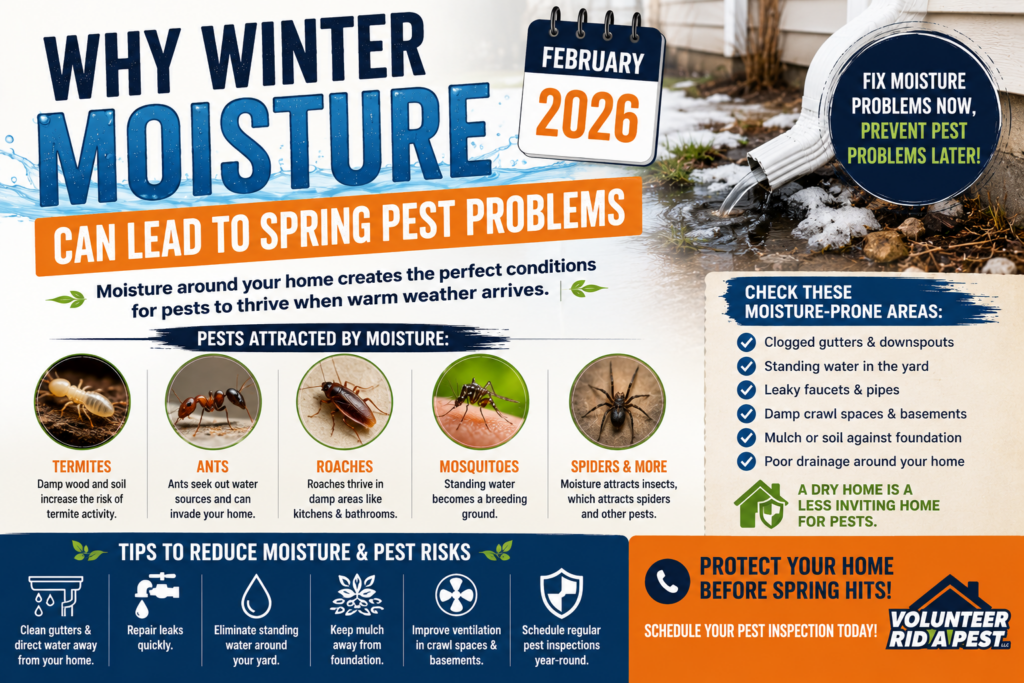
For Tennessee homeowners, managing moisture before spring can help reduce the risk of termites, ants, roaches, mosquitoes, spiders, and other pest concerns.
Why Moisture Matters in Pest Control
Pests need food, water, and shelter to survive. Moisture gives many pests one of the most important things they need: a reliable water source.
When damp areas develop around the home, pests may begin gathering near those spaces. Some may stay outside at first, while others may find their way into crawl spaces, basements, garages, bathrooms, kitchens, or wall voids.
Common moisture sources include:
- Clogged gutters
- Downspouts are draining too close to the foundation
- Standing water in low areas of the yard
- Leaky outdoor faucets
- Plumbing leaks
- Damp crawl spaces
- Mulch holding moisture near the home
- Poor ventilation
- Yard debris and leaf piles
- Overwatered landscaping
When these issues are not addressed, they can create pest-friendly conditions before spring activity increases.
Termites and Moisture Problems
Termites are one of the biggest concerns when moisture is present around a home. Damp soil, wet wood, crawl space moisture, and wood-to-ground contact can all increase the risk of termite activity.
Because termites often work quietly and out of sight, homeowners may not notice a problem until damage has already started. February is a good time to check around the home for warning signs and conditions that may attract termites.
Areas to watch include:
- Crawl spaces
- Foundation edges
- Porch supports
- Deck posts
- Basement walls
- Mulch beds
- Firewood storage areas
- Damp wood near the home
If moisture is collecting near the foundation or crawl space, it is a smart time to schedule a professional inspection before spring termite activity becomes more noticeable.
Ants Looking for Water and Shelter
Ants may become more active as the weather warms, but moisture can attract them even before spring fully arrives. Damp soil, mulch beds, kitchens, bathrooms, and areas around plumbing can all draw ants closer to the home.
Once ants find food or water inside, they may return repeatedly. What starts as a few ants near a sink or window can become a larger problem if the source is not addressed.
To help reduce ant activity:
- Keep food sealed.
- Wipe up spills quickly.
- Repair leaks.
- Keep counters and floors clean.
- Seal gaps around windows and doors.
- Keep mulch away from the foundation.
If ants keep returning, professional pest control can help identify where they are coming from and treat the problem at the source.
Roaches Thrive in Damp Areas
Roaches are strongly attracted to moisture. Kitchens, bathrooms, laundry rooms, basements, garages, and crawl spaces can all become problem areas when moisture is present.
A small leak under a sink or moisture around pipes can give roaches the conditions they need to survive. Because roaches hide in cracks, cabinets, drains, and dark spaces, they can be difficult to control once they settle in.
Homeowners can help prevent roach problems by:
- Fixing leaks quickly.
- Cleaning food crumbs and grease.
- Taking trash out regularly.
- Avoid leaving dishes in the sink overnight.
- Keeping cabinets dry.
- Reducing clutter in storage areas.
If roaches are seen indoors, it is best to schedule professional pest control early before the problem spreads.
Mosquitoes and Standing Water
Mosquitoes may not be as active during colder weather, but standing water around the property can become a problem as temperatures rise. February is a good time to identify areas where water collects before mosquito season begins.
Common water-holding areas include:
- Buckets
- Flowerpots
- Birdbaths
- Clogged gutters
- Tarps
- Outdoor toys
- Low spots in the yard
- Drainage areas
- Pet bowls
- Wheelbarrows
Removing standing water now can help reduce mosquito breeding areas before warm weather arrives.
Spiders and Other Moisture-Loving Pests
Moisture can also attract insects that spiders feed on. When small insects gather in damp areas, spiders may follow. Basements, garages, crawl spaces, sheds, and corners of the home can become more active when moisture and insects are present.
Other pests that may be connected to moisture include:
- Earwigs
- Silverfish
- Centipedes
- Millipedes
- Flies
- Occasional invaders
Reducing moisture can help make the home less inviting to these pests and the spiders that feed on them.
Areas Homeowners Should Check in February
A simple winter moisture check can help homeowners prepare before spring pest activity increases.
Check these areas around your home:
- Gutters and downspouts
- Crawl space entrances
- Foundation edges
- Outdoor faucets
- Basement walls
- Under sinks
- Around toilets and tubs
- Garage corners
- Mulch beds
- Decks and porches
- Yard drainage areas
- Around air conditioning units
If an area stays damp, smells musty, or shows signs of pest activity, it should be addressed before warmer weather arrives.
How to Reduce Moisture Around Your Home
Moisture prevention is an important part of pest prevention. A few simple maintenance steps can make your home less inviting to pests.
Helpful steps include:
- Clean gutters regularly.
- Direct downspouts away from the foundation.
- Repair leaks quickly.
- Remove standing water.
- Keep mulch pulled back from siding.
- Avoid overwatering landscaping.
- Improve drainage in low areas of the yard.
- Keep crawl spaces dry and properly ventilated.
- Store firewood away from the house.
- Trim shrubs and plants away from exterior walls.
- Seal cracks and gaps around the foundation.
These steps can help reduce the water, shelter, and access points pests need.
Why February Is a Smart Time for Pest Prevention
February is a good time to be proactive because spring pest activity is right around the corner. Taking action before pests become more active can help reduce the risk of infestations later.
A professional pest inspection can help identify:
- Moisture-prone areas
- Early signs of termite activity
- Ant trails or entry points
- Roach hiding areas
- Crawl space concerns
- Standing water sources
- Gaps around the home
- Conditions that may attract pests
Instead of waiting until pests are visible, early prevention helps homeowners stay ahead of the problem.
Protect Your Home Before Spring Pest Season
Moisture around the home can lead to bigger pest problems when left unchecked. Termites, ants, roaches, mosquitoes, spiders, and other pests are more likely to become active in damp conditions.
Volunteer Rid-A-Pest helps Tennessee homeowners protect their homes with professional pest control services designed for local pest pressures and seasonal changes.
Do not wait until spring pests become a problem. Contact Volunteer Rid-A-Pest today to schedule a pest inspection and help protect your home before warmer weather arrives.