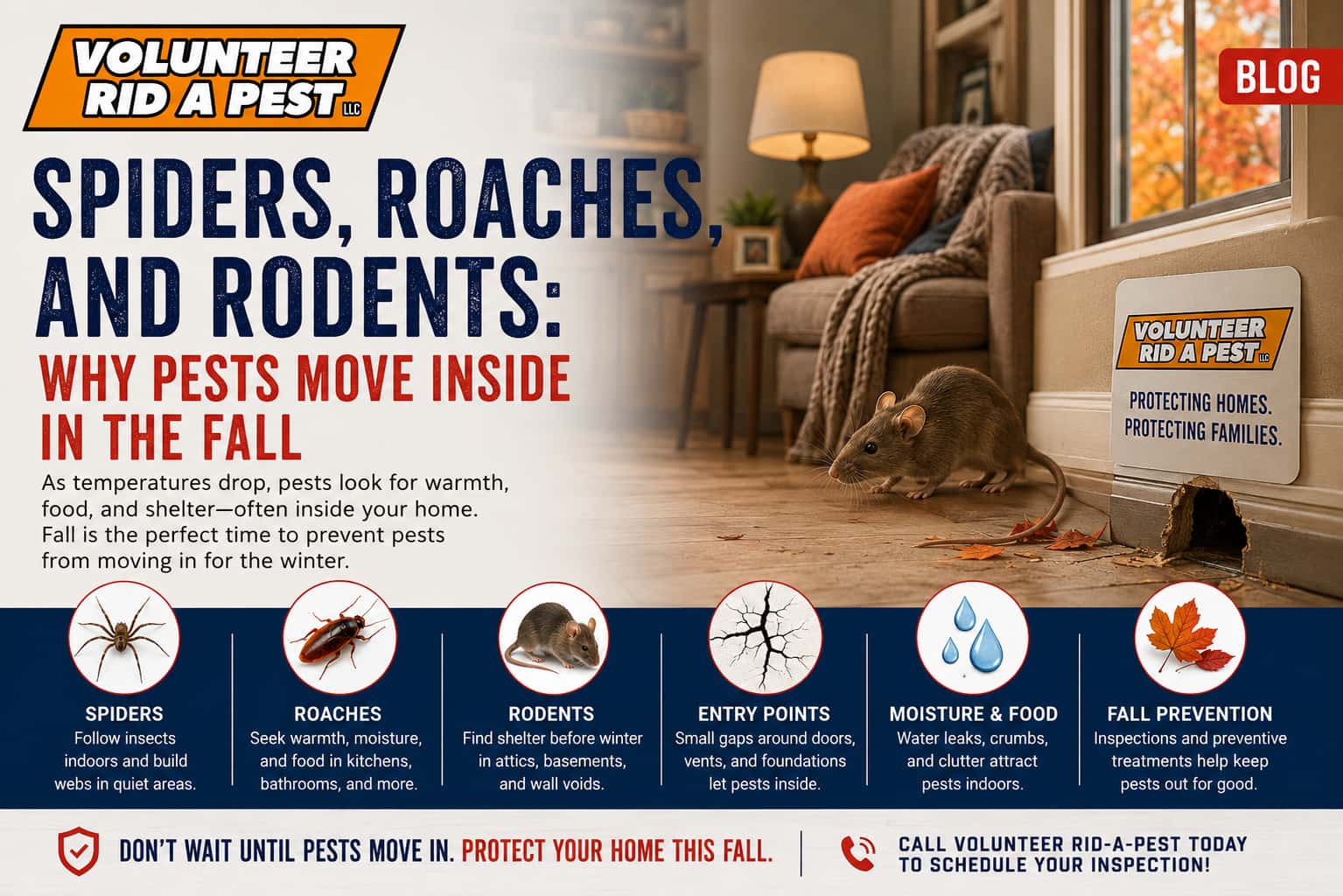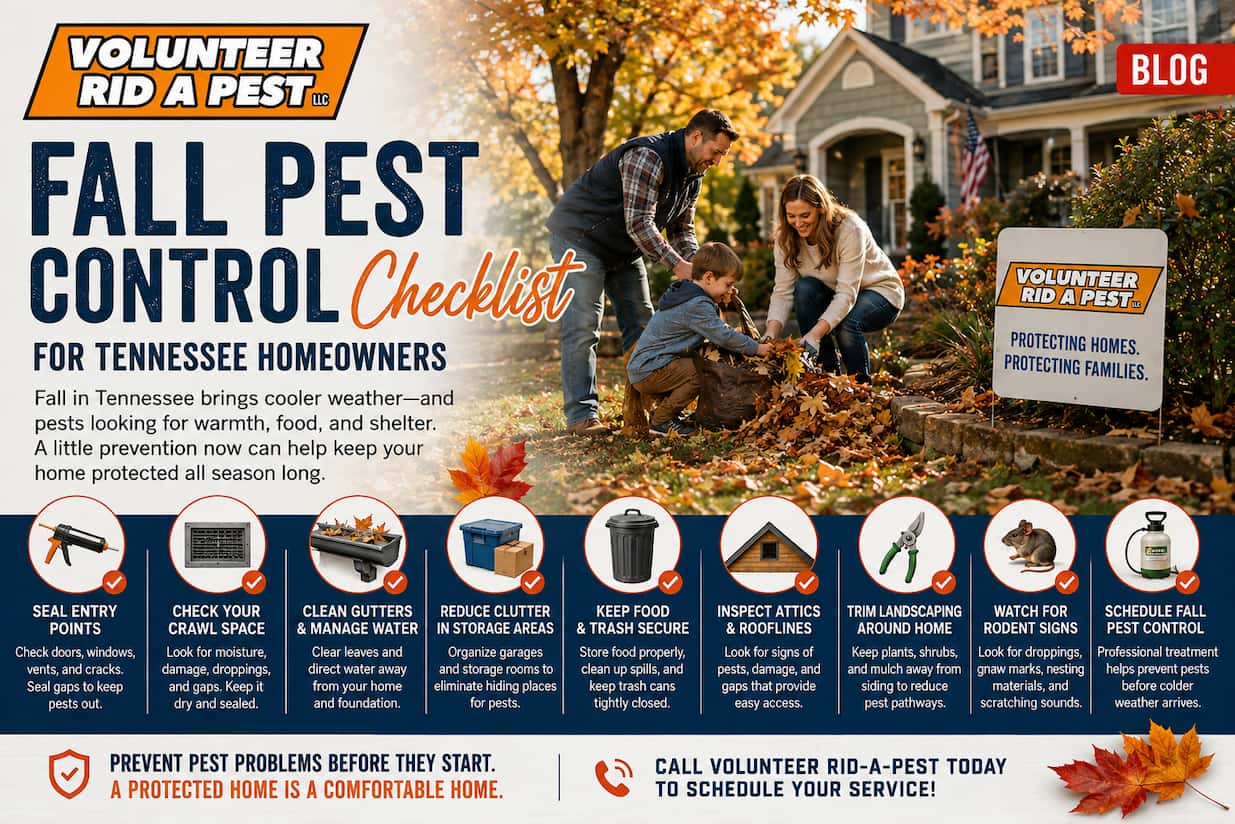
Fall in Tennessee brings cooler mornings, changing leaves, football weekends, and a shift in the way pests behave around your home. As temperatures begin to drop, many pests start looking for warmth, food, water, and shelter. Unfortunately, your home may offer exactly what they need.
Ants, spiders, roaches, rodents, stink bugs, and other pests may begin moving closer to the house in search of protected spaces. Some may enter through small cracks or gaps, while others may hide in crawl spaces, garages, basements, attics, or storage areas.
That is why fall is one of the best times to prepare your home for seasonal pest pressure. A little prevention now can help reduce pest problems before cooler weather settles in.
Why Fall Pest Control Matters
Many homeowners think pest control is only a spring or summer concern. However, fall is an important season for prevention. As outdoor temperatures change, pests look for places to survive the colder months.
Common fall pest concerns include:
- Rodents entering attics, crawl spaces, and garages
- Spiders moving into corners, basements, and storage areas
- Roaches seeking warmth and moisture indoors
- Ants searching for food and shelter
- Stinging insects becoming more noticeable near nests
- Occasional invaders gathering around windows and doors
Volunteer Rid-A-Pest offers residential and commercial pest control services, including pest, rodent, termite, mosquito, and moisture-related services designed to help protect homes and businesses from pest activity.
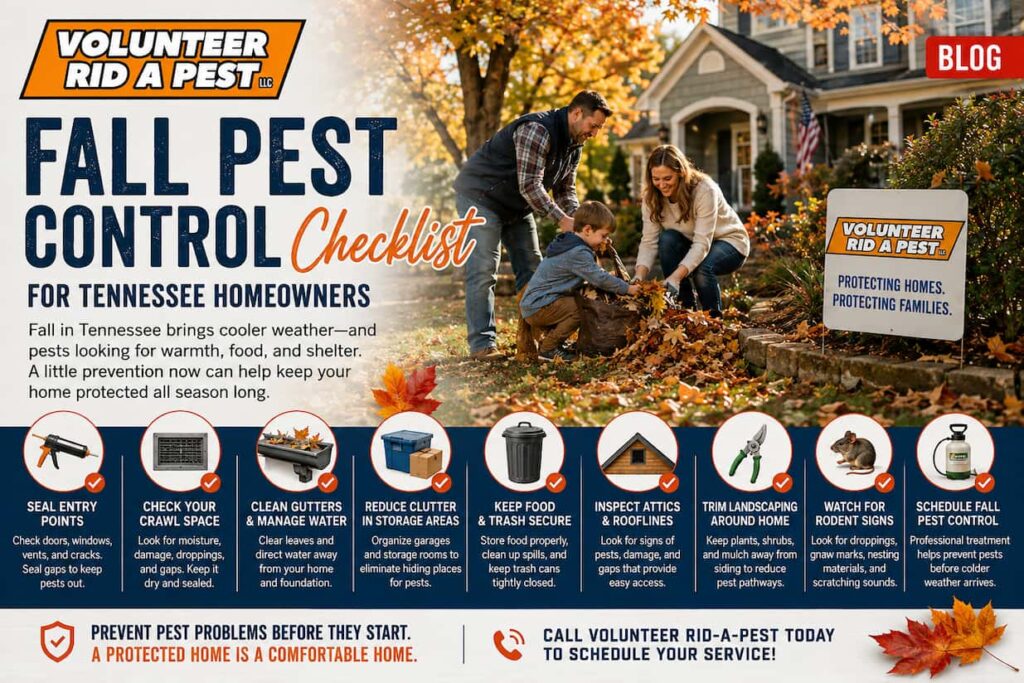
1. Seal Entry Points Around the Home
Pests do not need a large opening to get inside. Small gaps around doors, windows, utility lines, vents, siding, and foundations can give pests easy access.
Check these areas:
- Door frames
- Window frames
- Garage doors
- Foundation cracks
- Crawl space doors
- Utility openings
- Dryer vents
- Gaps around pipes
- Roofline openings
- Damaged weatherstripping
Sealing entry points is one of the most important steps in fall pest prevention. If pests cannot get inside, they are less likely to become a hidden problem during the colder months.
2. Check Your Crawl Space
Crawl spaces are easy to overlook, but they can become one of the most pest-prone areas of the home. They often provide shelter, moisture, and hidden access points.
During fall, inspect your crawl space for:
- Moisture or standing water
- Torn vapor barriers
- Rodent droppings
- Gnaw marks
- Damaged insulation
- Spider webs
- Roach activity
- Gaps around vents or doors
- Musty odors
A properly sealed crawl space door and other entry points are also important for keeping pests out. Check doors, vents, and openings for gaps or damage that could give rodents, insects, and other pests easy access.
Volunteer Rid-A-Pest’s moisture-related service information notes that excess moisture in crawl spaces can attract pests and contribute to structural concerns, which makes crawl space protection especially important for Tennessee homeowners.
3. Clean Gutters and Direct Water Away from the Foundation
Fall leaves can quickly clog gutters and downspouts. This buildup can also create ideal hiding and breeding areas for pests such as mosquitoes, ants, and cockroaches. When water cannot drain properly, it may collect in gutters or near the foundation, crawl space, or basement, creating additional pest-friendly conditions.
Moisture around the home can attract pests such as termites, ants, roaches, mosquitoes, and other moisture-loving insects.
To reduce moisture issues:
- Clean gutters regularly.
- Make sure downspouts drain away from the home.
- Repair leaking gutters.
- Remove leaves from roof valleys.
- Check low spots in the yard.
- Keep mulch from sitting directly against siding.
A dry home is less inviting to pests.
4. Reduce Clutter in Garages and Storage Areas
Garages, basements, sheds, and storage rooms can become hiding places for fall pests. Cardboard boxes, old papers, seasonal decorations, sports equipment, and unused items can provide shelter for spiders, roaches, rodents, and other pests.
Helpful steps include:
- Store items in sealed plastic bins.
- Keep boxes off the floor when possible.
- Remove unnecessary clutter.
- Sweep corners and shelves.
- Keep pet food and birdseed in sealed containers.
- Check holiday decorations before bringing them inside.
The more organized your storage areas are, the easier it is to spot pest activity early.
5. Keep Food and Trash Secure
As pests search for food, kitchens, pantries, trash cans, and pet food areas can become easy targets.
To reduce attractants:
- Store pantry food in sealed containers.
- Clean crumbs and spills quickly.
- Take trash out regularly.
- Keep garbage cans tightly closed.
- Avoid leaving pet food out overnight.
- Clean behind appliances.
- Rinse recyclables before storing them.
Even small crumbs or open food packages can attract ants, roaches, rodents, and other pests.
6. Inspect Attics and Roofline Areas
Rodents and other pests may enter through roofline gaps, vents, soffits, or damaged exterior materials. Once inside, attics offer warmth, insulation, and quiet nesting space.
Look for:
- Small holes near the roofline
- Damaged vents
- Droppings
- Scratching sounds
- Chewed insulation
- Nesting materials
- Unusual odors
- Gaps around attic access points
If you suspect attic activity, it is best to schedule a professional inspection before the problem spreads.
7. Trim Landscaping Away from the House
Overgrown shrubs, tree branches, vines, and plants touching the home can create pest pathways. They can also trap moisture and provide shelter near the foundation.
Fall is a good time to:
- Trim shrubs away from siding.
- Cut branches away from the roofline.
- Remove leaf piles.
- Keep grass trimmed.
- Pull mulch back from the foundation.
- Clear debris around crawl space vents.
A clean perimeter makes it harder for pests to hide close to your home.
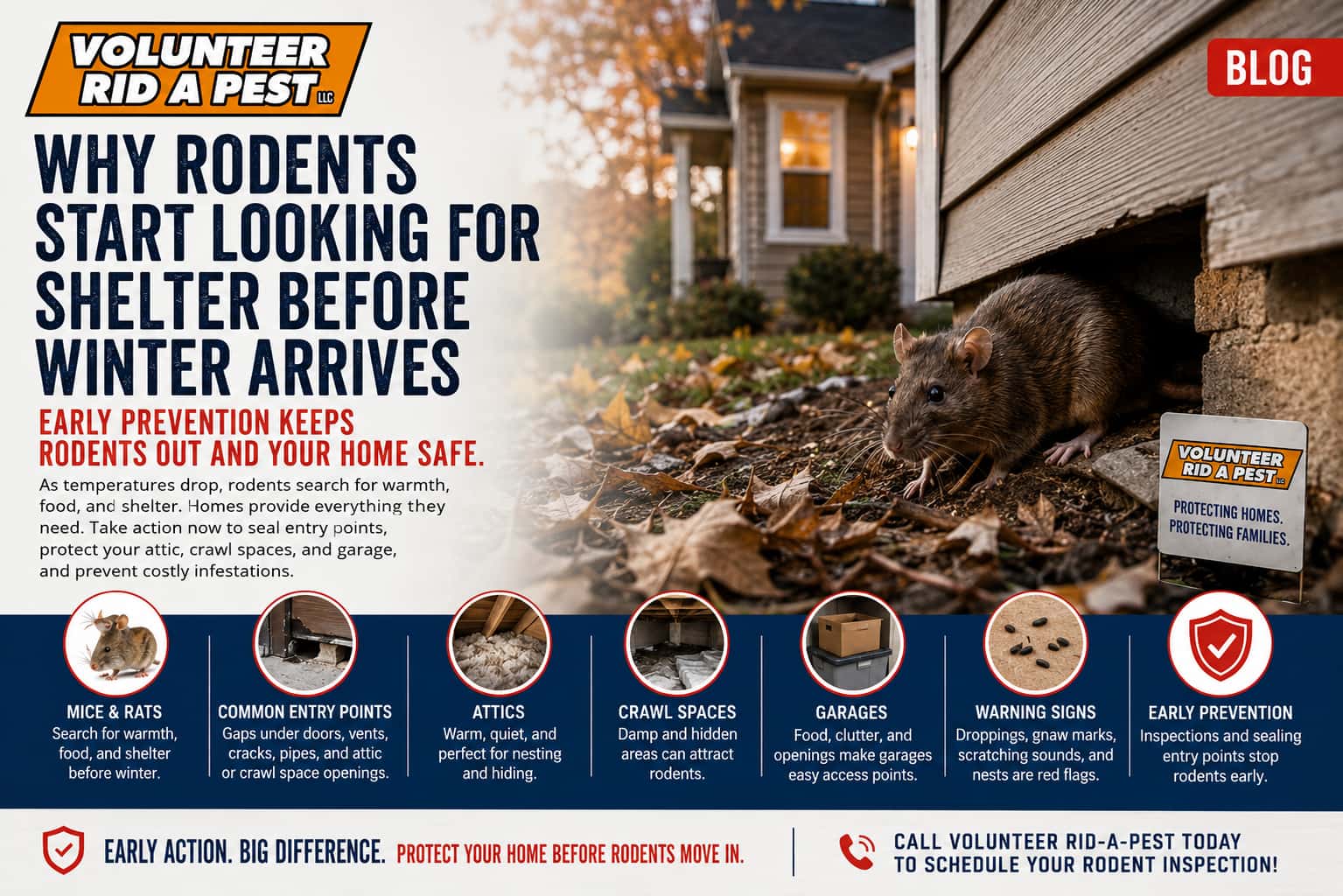
8. Watch for Rodent Warning Signs
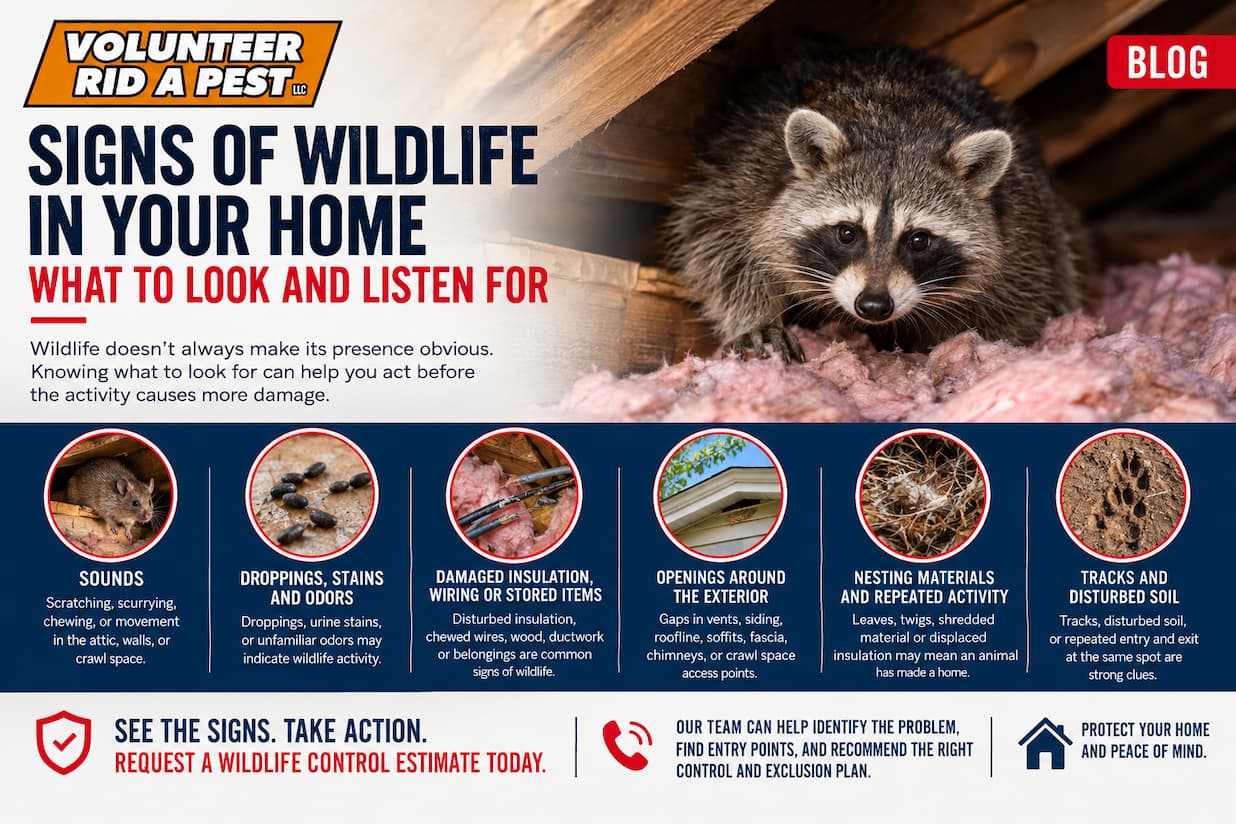
Rodents often become more active around homes in the fall as they search for shelter before winter. Early warning signs may include:
- Droppings
- Scratching sounds
- Gnaw marks
- Nesting materials
- Damaged food packaging
- Grease marks along walls
- Musty odors
Volunteer Rid-A-Pest lists rodent control among its specialized services for homes and businesses and describes rodent service as a comprehensive approach to eliminating and preventing rodent infestations.
If you notice these signs, do not wait. Rodent problems can grow quickly when left untreated.
9. Schedule Fall Pest Control Treatment
Fall pest control is about prevention. Professional treatment can reduce active pests, treat common entry points, and help protect your home before colder weather increases indoor pest pressure.
Professional pest control can help with:
- Exterior treatments
- Interior treatments when needed
- Entry point recommendations
- Crawl space checks
- Rodent prevention
- Spider and roach control
- Seasonal pest monitoring
Routine service is especially helpful because pest activity changes throughout the year. Volunteer Rid-A-Pest offers service plans, including quarterly or monthly pest control options, as well as specialized solutions such as rodent and termite control.
Protect Your Home Before Cooler Weather Arrives
Fall is the perfect time to take a closer look at your home and prepare for seasonal pest pressure. By sealing entry points, checking crawl spaces, reducing moisture, cleaning storage areas, and scheduling pest treatments, Tennessee homeowners can help prevent pests from moving indoors.
Volunteer Rid-A-Pest helps local homeowners stay protected with pest control services designed for Tennessee homes, families, and seasonal pest challenges.
Contact Volunteer Rid-A-Pest today to schedule fall pest control service and help protect your home before cooler weather arrives.