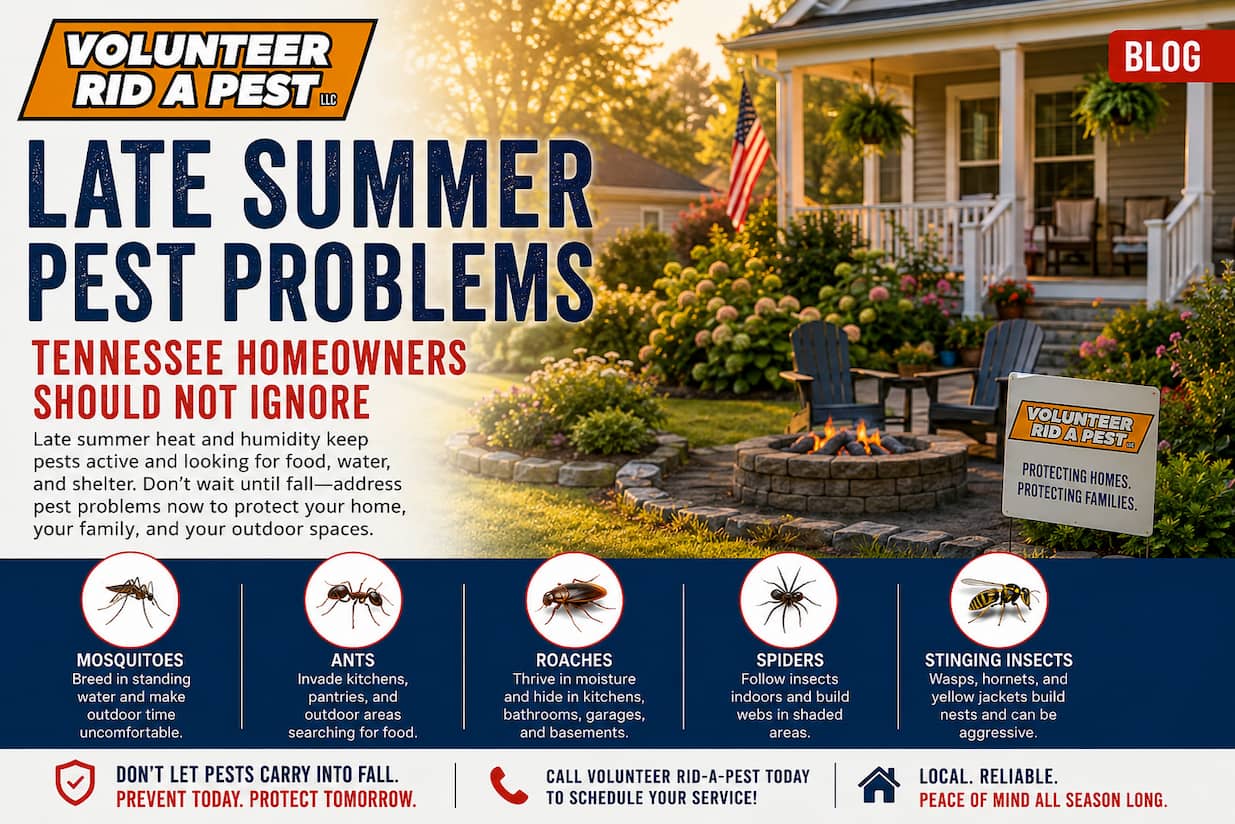
Late summer in Tennessee can bring intense heat, humidity, afternoon storms, and plenty of pest activity. By August, many pests have had months to feed, breed, build nests, and spread around homes and yards.
This is the time of year when homeowners may notice more mosquitoes in the evening, ants in the kitchen, roaches near moisture-prone areas, spiders around porches and garages, or stinging insects near outdoor spaces.
These pest problems may seem like part of summer, but they should not be ignored. Late summer pest activity can quickly carry into fall if pests find food, water, shelter, or entry points around your home.
Why Pest Problems Increase in Late Summer
By late summer, pest populations may be at their highest. Warm weather and humidity help many pests remain active, while summer rain and standing water create breeding areas for mosquitoes and moisture-loving insects.
Late summer pest activity is often connected to:
- High humidity
- Standing water
- Food crumbs and spills
- Outdoor garbage
- Pet food and water bowls
- Overgrown landscaping
- Mulch and shaded areas
- Moisture around foundations
- Open doors and windows
- Cracks and gaps around the home
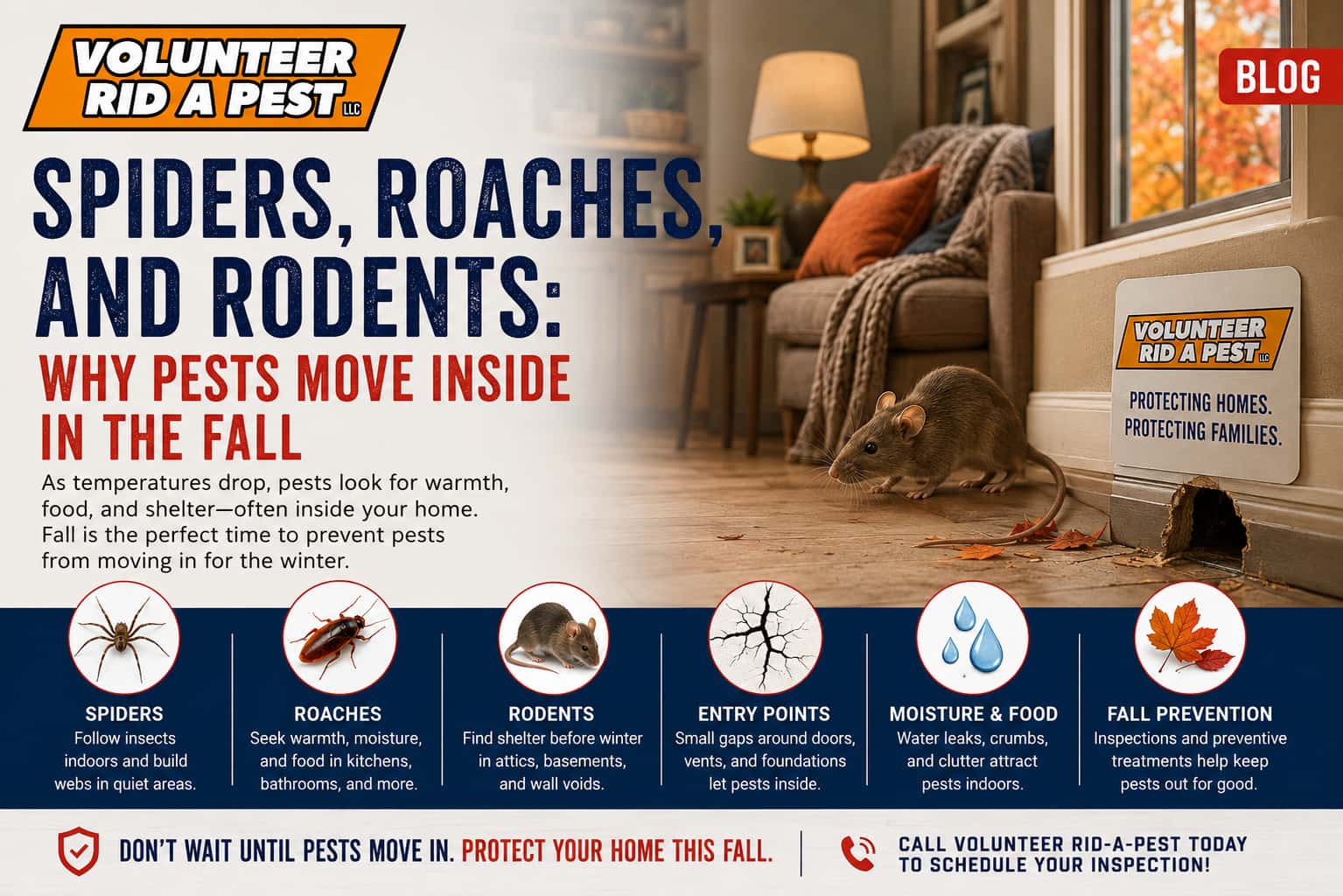
As outdoor conditions shift toward fall, some pests may also begin looking for ways to move closer to the home.
Mosquitoes
Mosquitoes are one of the most frustrating late-summer pests. They can make patios, porches, yards, and outdoor gatherings uncomfortable.
Mosquitoes breed in standing water, and even small bodies of water can create a problem. After summer storms, homeowners should check the yard for water that may be collecting in containers, gutters, toys, birdbaths, tarps, flowerpots, and low spots.
Volunteer Rid-A-Pest’s mosquito control service focuses on inspecting properties for potential breeding sites and areas of high mosquito activity, including standing water sources such as birdbaths, clogged gutters, flowerpots, and containers.
To help reduce mosquito activity:
- Empty standing water.
- Clean gutters regularly.
- Refresh birdbath and pet bowl water.
- Trim shrubs and tall grass.
- Remove leaf piles and yard debris.
- Use outdoor fans on patios when possible.
- Schedule professional mosquito control.
Professional mosquito control can help target the areas where mosquitoes rest and breed, giving families a more comfortable outdoor space.
Ants
Ants are active throughout the summer, but they can become especially frustrating in late summer when they continue searching for food and water.
You may notice ants around:
- Kitchen counters
- Pantries
- Sinks
- Bathrooms
- Windowsills
- Doorways
- Patios
- Mulch beds
- Sidewalks
- Foundation areas
A few ants may be a sign of a larger colony nearby. Volunteer Rid-A-Pest’s common pest service notes that ants can quickly become a major nuisance, whether they appear as a small line in the kitchen or a larger colony invading the yard. Their approach includes targeting ants at the source to eliminate colonies and prevent their return.
Homeowners can help reduce ant activity by sealing food, wiping spills, taking trash out, and sealing small gaps around the home. If ants keep returning, professional treatment can help address the source.
Roaches
Roaches are drawn to warmth, moisture, food, and shelter. Late summer humidity can make kitchens, bathrooms, laundry rooms, garages, crawl spaces, and basements more attractive to roaches.
Roaches may hide:
- Under sinks
- Behind appliances
- Inside cabinets
- Around drains
- Near plumbing
- In garages
- In crawl spaces
- Around trash areas
Seeing one roach indoors can be a sign that more are hiding nearby. Roaches can reproduce quickly, so early treatment matters.
To help prevent roaches:
- Fix leaks and moisture problems.
- Keep food sealed.
- Clean crumbs and grease.
- Take trash out regularly.
- Avoid leaving dishes in the sink overnight.
- Reduce clutter in storage areas.
- Schedule professional pest control.
Professional pest control can help identify the conditions attracting roaches and treat areas where they are likely hiding.
Spiders
Spiders often become more noticeable in late summer because other insects are active. Since spiders feed on insects, they may gather around areas where bugs are present.
Common spider areas include:
- Porches
- Garages
- Basements
- Crawl spaces
- Sheds
- Outdoor lights
- Corners
- Window frames
- Decks
- Storage areas
Volunteer Rid-A-Pest’s service plan mentions spider web sweeping as part of its approach to keeping homes neat and pest-free.
To help reduce spiders:
- Remove webs regularly.
- Keep garages and storage areas organized.
- Reduce clutter.
- Seal cracks and gaps.
- Turn off unnecessary outdoor lights.
- Trim shrubs away from the home.
- Control the insects that attract spiders.
The best way to manage spiders is often to reduce the insects they are feeding on.
Stinging Insects
Wasps, hornets, and yellow jackets can become more aggressive and noticeable in late summer. Their nests may be larger by this point in the season, which can create safety concerns near porches, decks, sheds, rooflines, trees, playgrounds, and outdoor gathering areas.
Volunteer Rid-A-Pest identifies wasps and hornets as common pests that can become aggressive when nests are disturbed and notes that they safely remove nests and use preventive measures to help keep these pests from returning.
Homeowners should avoid disturbing active nests, especially in high-traffic areas. Stinging insects can be dangerous for children, pets, and anyone with allergies.
To reduce stinging insect problems:
- Keep trash cans sealed.
- Clean up outdoor food and drinks.
- Watch for nest activity.
- Avoid swatting or disturbing nests.
- Schedule professional treatment for active nests.
Professional service is the safer option when stinging insects are nesting near your home.
Why Late Summer Pest Control Matters
Late summer pest problems can continue into fall if they are not addressed. Ants, roaches, spiders, mosquitoes, and stinging insects may remain active as long as conditions support them. Some pests may also start moving closer to homes as weather patterns change.
Professional pest control can help homeowners:
- Reduce active pest problems
- Treat pest-prone areas
- Identify entry points
- Reduce hiding spots
- Protect outdoor spaces
- Prepare for fall pest pressure
- Prevent small issues from becoming larger infestations
Volunteer Rid-A-Pest provides pest control services for residential and commercial properties, including ant, roach, spider, and mosquito control; termite inspections and treatment options; seasonal pest control; and general pest prevention.
Homeowner Tips for Late Summer Pest Prevention
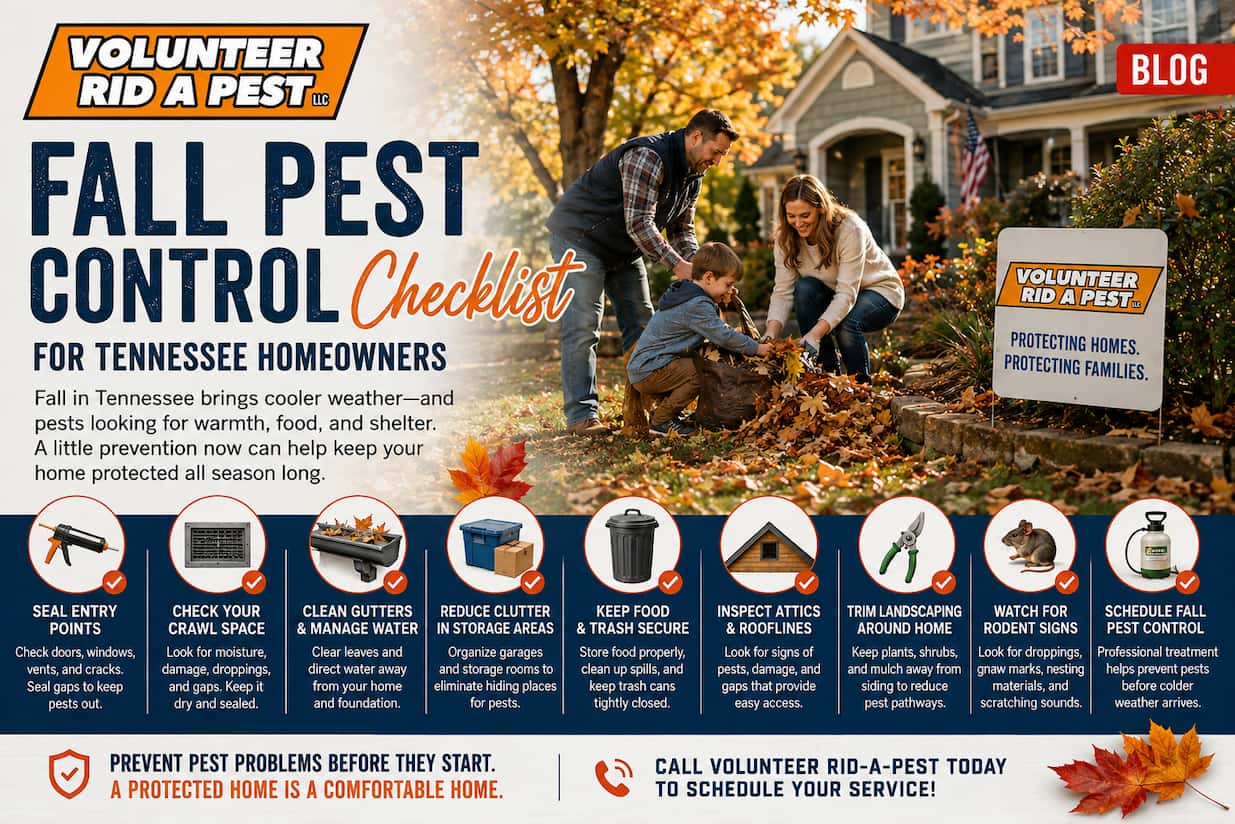
A few simple habits can help make your home and yard less inviting to pests.
Try to:
- Empty standing water after rain.
- Keep grass and shrubs trimmed.
- Store food in sealed containers.
- Clean crumbs and spills quickly.
- Take trash out often.
- Keep outdoor garbage cans closed.
- Repair leaks and moisture issues.
- Seal gaps around doors and windows.
- Reduce clutter in garages and storage areas.
- Check screens and door sweeps.
- Keep pet food sealed.
- Schedule routine pest control service.
These steps can help reduce food, water, shelter, and access points that pests need.
Protect Your Home Before Summer Ends
Late summer pests should not be ignored. Mosquitoes, ants, roaches, spiders, and stinging insects can disrupt your comfort, create safety concerns, and continue causing problems as fall approaches.
Volunteer Rid-A-Pest helps Tennessee homeowners protect their homes, families, pets, and outdoor spaces with dependable pest control solutions designed for local pest pressure.
Contact Volunteer Rid-A-Pest today to schedule pest control service and keep your home protected through late summer and beyond.