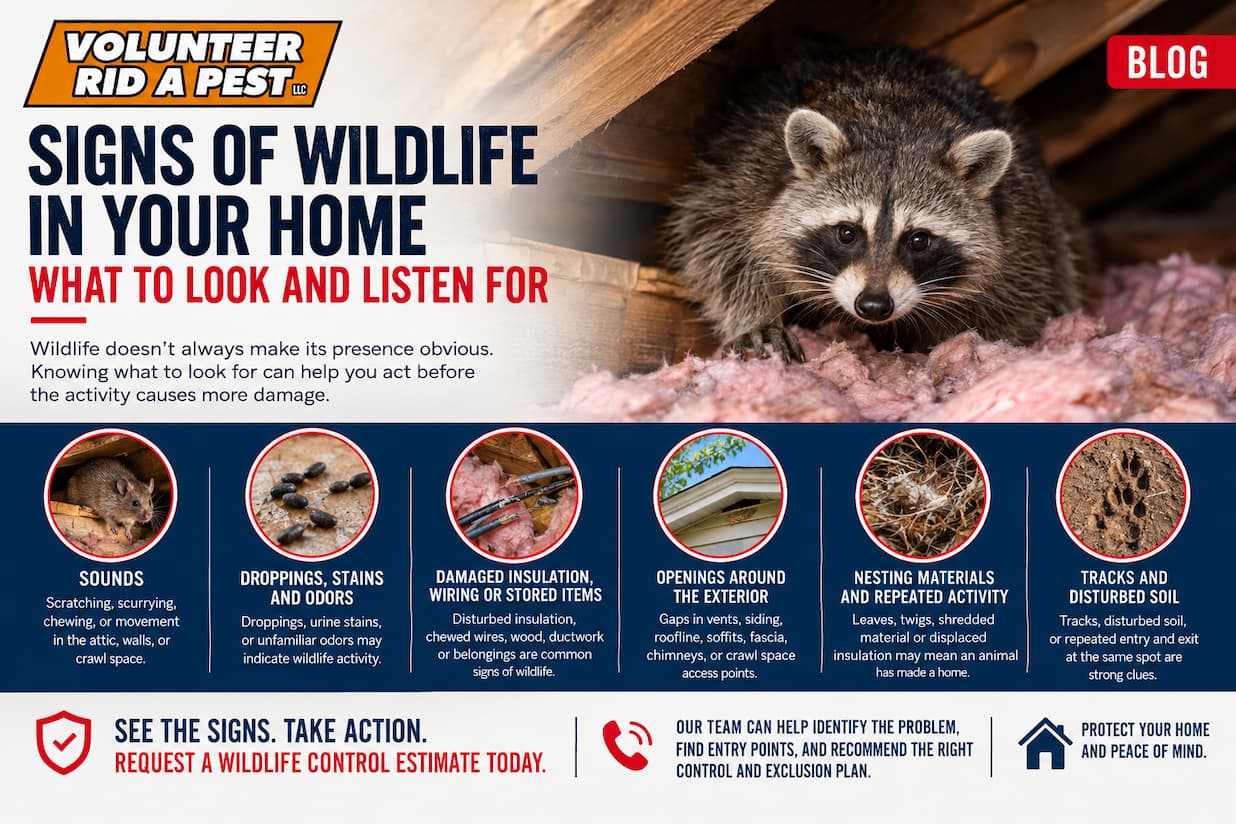
Wildlife does not always make its presence obvious. An animal may spend time in an attic, crawl space, chimney, or wall void before anyone sees it. Often, the first clue is a sound, an odor, or damage around an opening.
Knowing what to look for can help you act before the activity causes more damage. Here are common signs of wildlife around a home in Southeast Tennessee or North Georgia.
Sounds in the Attic, Walls, or Crawl Space
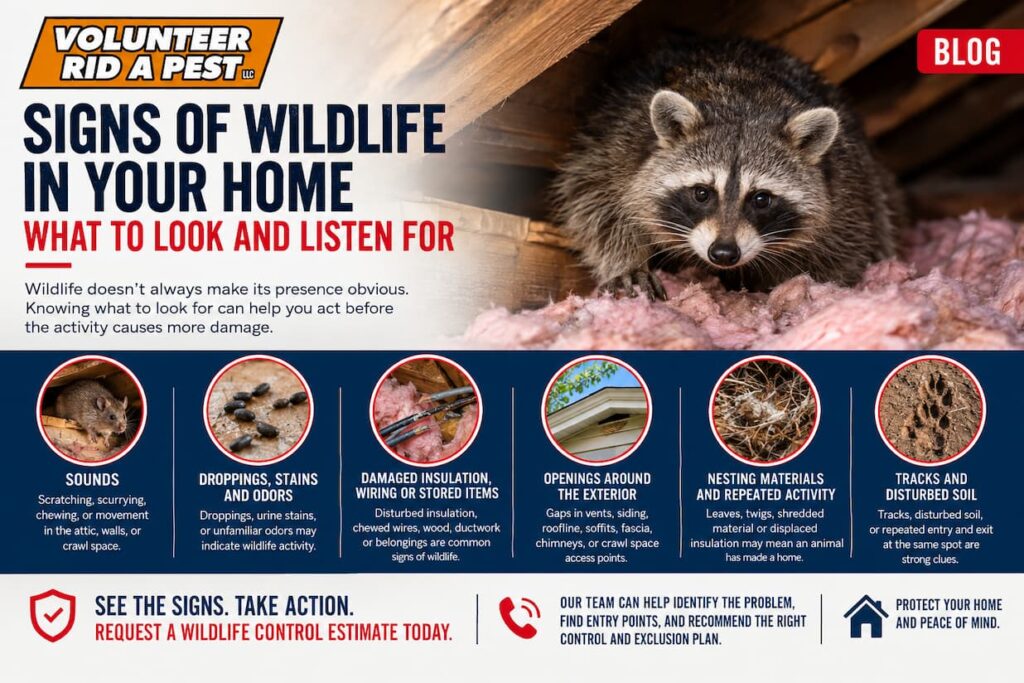
Scratching, scurrying, chewing, or movement overhead may point to an animal inside the structure. You might also hear activity in the walls or beneath the floor. Sounds can be more noticeable at night or early in the morning, depending on the animal.
A sound alone may not tell you which species is present. Note where and when you hear it so you can share those details during an inspection.
Droppings, Stains, and Odors
Droppings or urine stains in an attic, garage, or crawl space can indicate wildlife activity. Strong or unfamiliar odors may also develop where animals have nested or moved through enclosed areas.
Avoid handling droppings or nesting material with bare hands. An inspection can help identify the source and affected areas.
Damaged Insulation, Wiring, or Stored Items
Animals may disturb insulation while moving or nesting. Chewed wires, wood, ductwork, or stored belongings are other signs to investigate. Look for damage near where you have heard activity, but don’t enter an unsafe or hard-to-reach space to search.
Openings Around the Exterior
Wildlife can take advantage of damaged vents, loose siding, gaps along the roofline, and unsecured crawl space access points. From a safe vantage point, check for openings near soffits, fascia boards, chimneys, utility lines, and the foundation.
You may also notice tracks, disturbed soil, or damage around a porch or deck. Repeatedly watching an animal enter or leave the same area is a particularly useful clue.
Nesting Materials and Repeated Activity
Leaves, twigs, shredded material, or displaced insulation may suggest that an animal has made a sheltered space its home. One sighting outdoors does not necessarily mean wildlife is inside your house. Repeated activity at the same opening, paired with sounds or damage, gives you a stronger reason to request an inspection.
What Should You Do Next?
Keep track of the signs you notice, including the location and time of day. Avoid cornering or handling a wild animal. Sealing an opening before confirming what is inside may also leave an animal trapped in the structure.
Volunteer Rid-A-Pest can inspect accessible areas, help identify the activity and possible entry points, and recommend an appropriate control and exclusion plan. If you have noticed signs of wildlife in your Cleveland or Chattanooga home, request a wildlife control estimate to learn what is happening and what to do next.